HOW TO IMPLEMENT A WATER-SOLUBLE FERTILIZER PROGRAM FOR INDOOR AND GREENHOUSE CROP PRODUCTION
HOW TO IMPLEMENT A WATER-SOLUBLE FERTILIZER PROGRAM FOR INDOOR AND GREENHOUSE CROP PRODUCTION
 There are many approaches to crop nutrition for greenhouse and indoor crops cultivated for commercial purposes.
Most nutrient programs are designed in accordance with plant tissue testing and run-off water irrigation analysis. The goal of this article is to educate the reader on how best to approach nutrients and fertilizers to avoid costly mistakes and setbacks.
Having worked with thousands of farms for over 20 years there are patterns that lead to success and failure, and it is our goal to assist farmers in making informed decisions from the mistakes of others, rather than mistakes of their own.
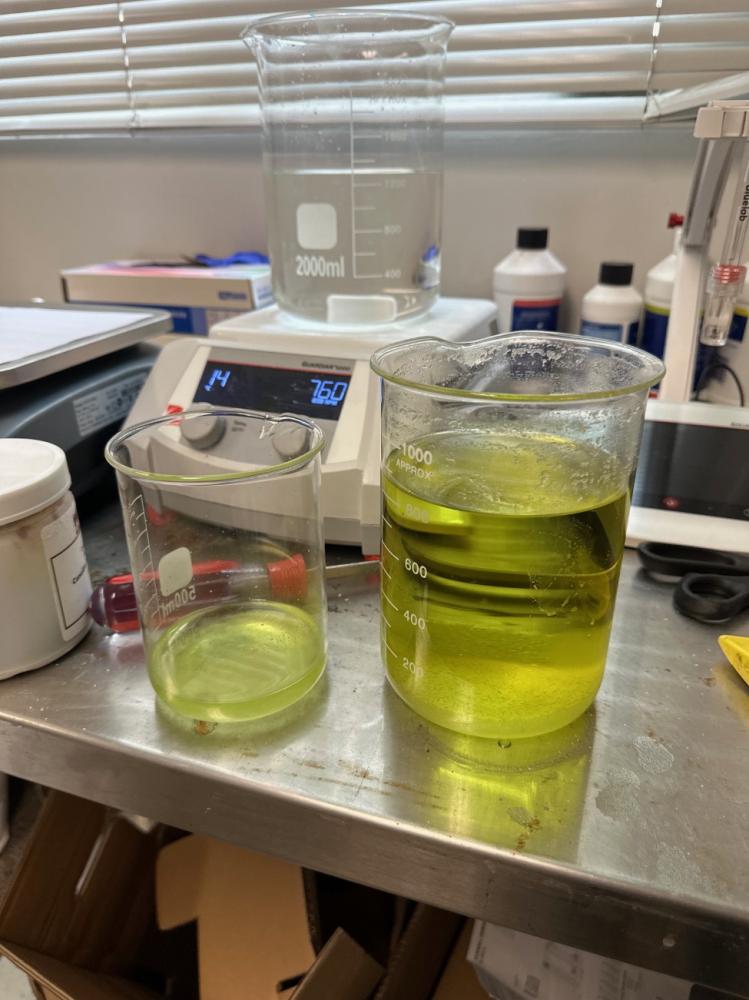
*Setting up a testing station with the proper equipment ensures testing can be performed and data can be collected.
In this article we will focus on fertilizer and crop nutrition for greenhouse and indoor crops being fed through a drip irrigation system. Cultivators and farms growing outdoor in soil will have other considerations not included in this article.
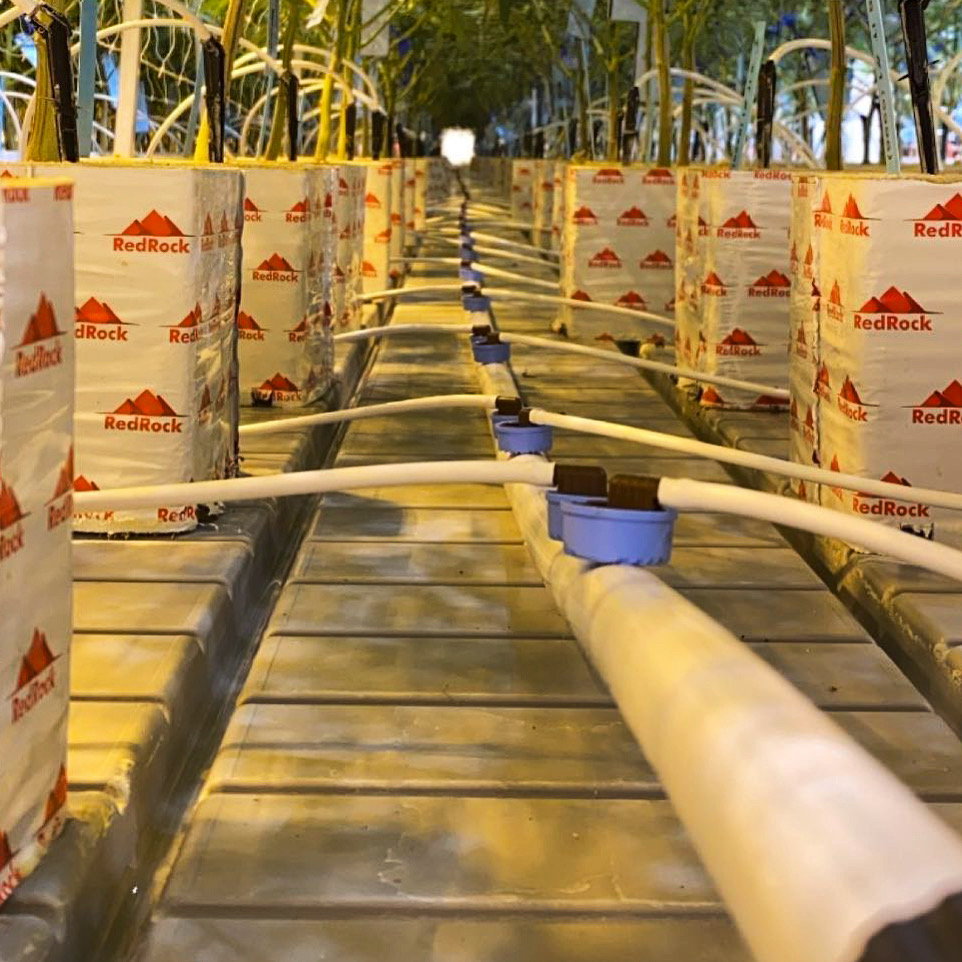
*Aquagation 0.29 GPH drip irrigation for crops grown in RedRock Stonewool blocks.
MISCONCEPTIONS REGARDING CROP NUTRITION-
When speaking with farmers, experienced cultivators, and lead growers it is common to find a lack of deep insight into products they have been using for many years.
Inorganic salts are chemistry, microbes are biology, and the people using them went to ag colleges and had basic course work on the topics but didn’t have the time or opportunity to delve more deeply down that specific rabbit hole.
Although this doesn’t take away from their ability to successfully grow crops, in most instances, better than someone that has extensive fertilizer knowledge, it does influence the decision making process and can lead to poor outcomes of choice.
Some of the major pitfalls regarding fertilizer selection are:
- Excessive brand loyalty
- Lack of knowledge regarding chemistry
- Insufficient time to properly research fertilizers and additives
- Insufficient time and resources to trial and test fertilizers and additives
- Lack of understanding regarding how to incrementally adjust inputs
- Decision makers don’t understand or are uninvolved in financials of company
HOW TO BEGIN UNDERSTANDING FERTILIZERS AND BALANCED CORP NUTRITION? PERFORM A WATER TEST
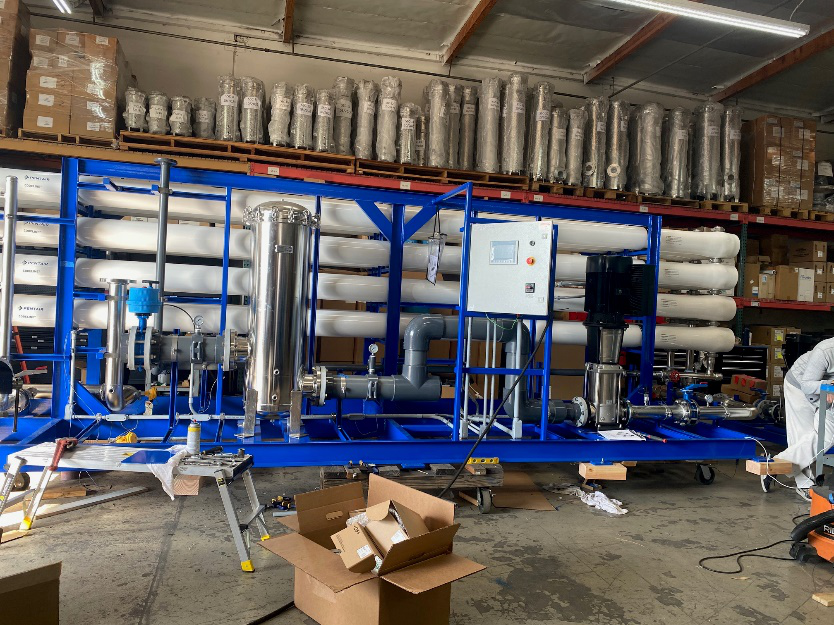
*Aquagation 150,000 GPD Reverse Osmosis Water System designed to provide 0-5 TDS water for crop production.
First, before anything, test your input water. This is crucial even when using reverse osmosis water as you need to understand what, if anything, is in the water prior to mixing fertilizer recipes. When testing input water, we often find things we didn’t expect such as chlorine, chloramines, bicarbonates, micro elements, high or low pH levels, and even non-functioning RO systems that appeared to be operational.
The other reason for testing input water is that down the road there can be issues and when water is tested it’s important to have a baseline. We have found microbial growth, bacteria, pathogens, etc. and would not have known if it was a new or old issue without a prior test to compare to.
PERFORM A FERTILIZER TEST-
Now that we know what is in the water, be sure to mix up the fertilizers you intend on using and send that off for testing.
All too frequently fertilizers don’t contain the crucial elements we expect them to or some of the contents that should be available fall out of solution, gets bound up with other elements, or does not hit the desired targets.
Starting with nutritional deficiencies or toxicities will not lead to good things. Don’t be one of the farms that is growing with the lights off, unsure of where they are, and without high and low bands for desired crop nutritional levels.
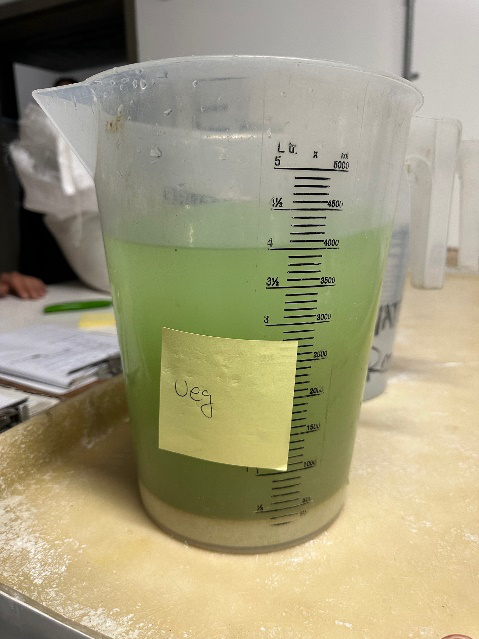
*Jar Test that clearly demonstrates a lack of fertilizer solubility.
PERFORM A JAR TEST-
 Performing a jar test is another crucial step that many miss or ignore. Take a clear vessel and fill it with water. Using a 1-gallon receptacle makes things easy. Fill it with source water to the 0.75-gallon mark.
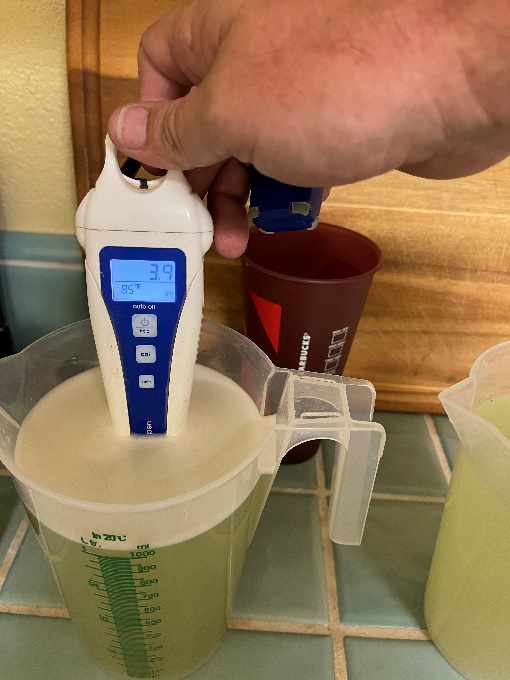
Add fertilizer inputs just as you intend to do when mixing fertilizers. Once inputs are added, top off to the 1-gallon mark, mix it up until fully dissolved, and document results. So, use your real source water. If your recipe calls for 30mL per gallon put 30mL and if you plan to put PART A and then PART B be sure to do so in that order. Buffer it with acid or alkaline just as you intend to do and measure EC/pH, color, precipitation (Fallout), temperature (Endothermic or exothermic), and any other variables.
*Checking pH while performing a Jar Test on a new nutrient program and ultimately determining it does not meet specification.
 Record this information and continue to monitor and log data again, and again, and again, for as long as you intend on letting your stock tanks sit.
If you mix nutrients every 3 days then let the Jar Test sit for 3 days.
By logging this information and monitoring your mixed recipe you can glean valuable information for yourself and your team.
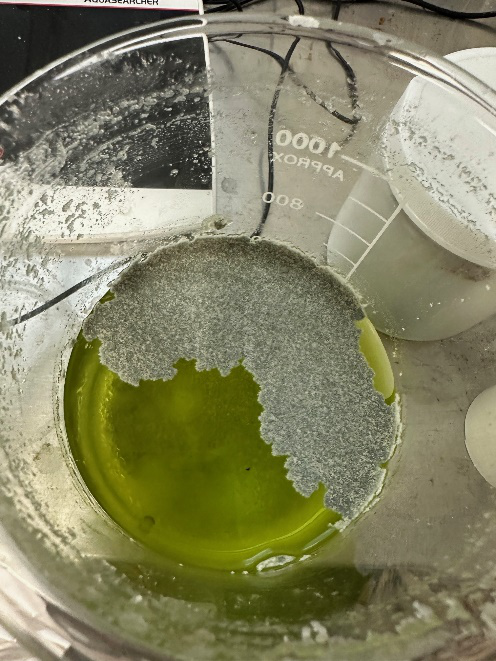
*Ensuring the jar test is performed for the same duration the stock tanks will sit is important as things change over time.
Here you see biological growth that occurred only after several days but absolutely should not occur and is symptomatic of other issues that can be identified and fixed.
Noticing pH swings, temperature changes, changing colors, and for how long the recipe is stable, will prevent future mistakes when mixing stock tanks, assist with mitigating worker error, and limiting instances where parameters fall outside of desired thresholds.
Be sure to note if agitation, pH adjustment or other intervention is required.
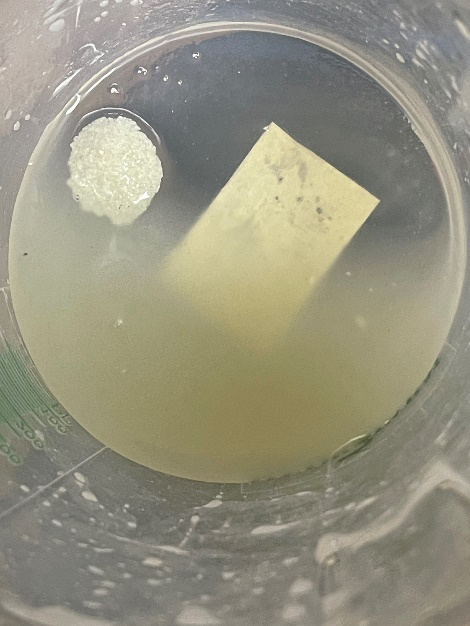 *Failed Jar Test due to excessive undissolved particulate and milky/cloudy water due to suspended particulate that would not dissolve.
*Checking undissolved particulates inform the operator in advance what to expect.
Sometimes impurities look like white sand while other times they are tiny black specs or even slimy brown.
All this information is valuable and will assist employees in catching issues later, before they create major issues.
The results of the jar test require some interpretation.
The goal is to check nutrient compatibility and ensure recipes will work with the specific irrigation system onsite.
Lots of fallout is problematic if missing targets and the irrigation system is sensitive to clogging, such as precision drip irrigation.
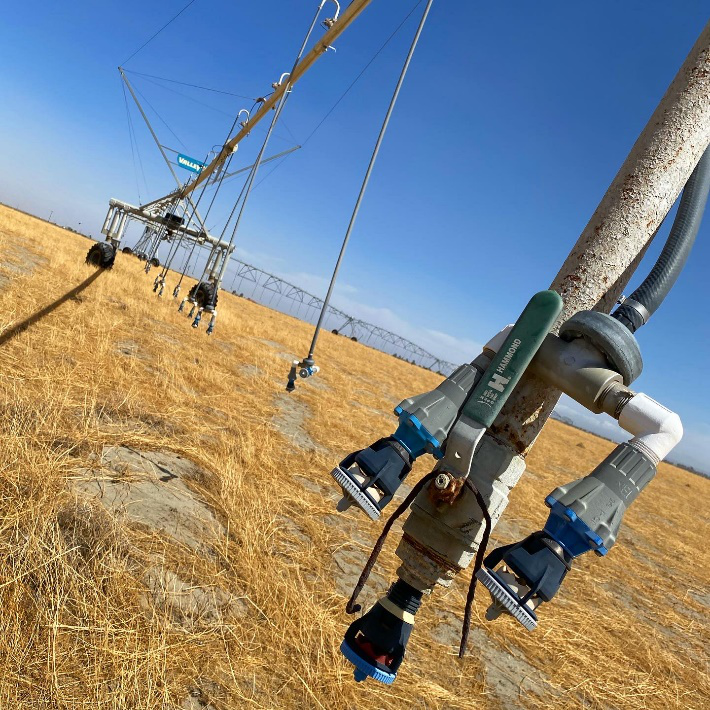 Sprinkler systems, open flow systems, pivot irrigation, flood & drain, and other clog resistant systems may or may not be cause for concern.
*Pivot irrigation is common in large, outdoor, field grown crops. They are less prone to clogging than drip irrigation.
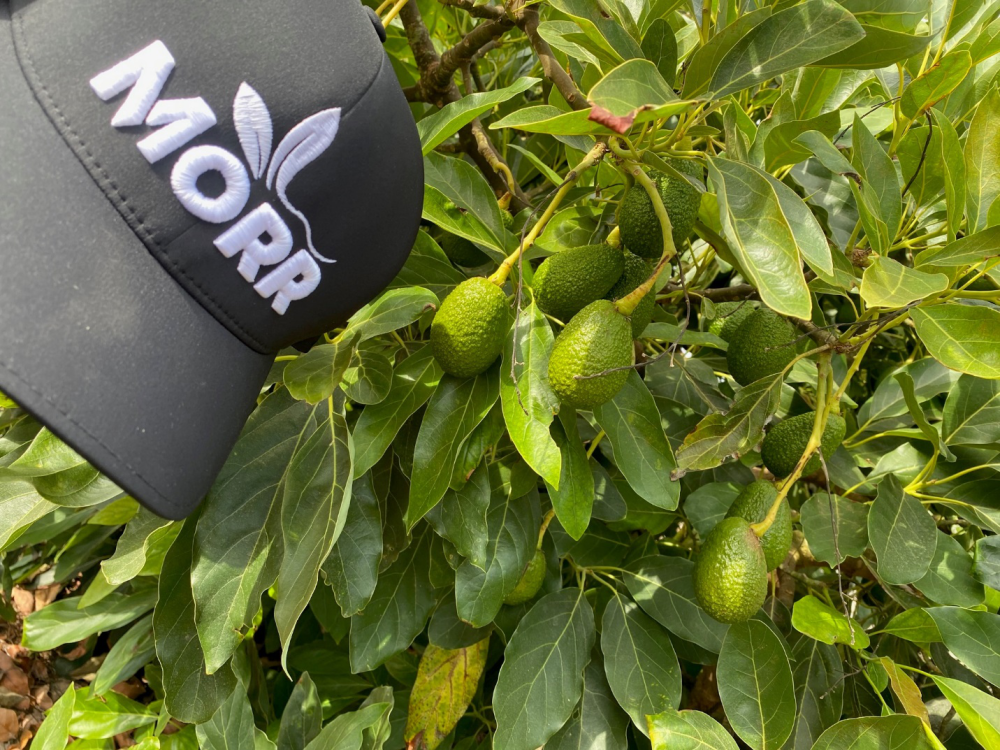
*Flood and drain or sprinkler fertigation of avocados is common in California and Mexico.
REMEMBER: Any time nutrients are being adjusted another jar test is required. Changing EC?
Perform a jar test. Adding a new additive you’ve been convinced you cannot live without? Perform a jar test. Source water changes? Perform a jar test.
Any deviation from your standard requires testing for compatibility.
MOVING FROM FERTILIZER TESTING INTO PRODUCTION-
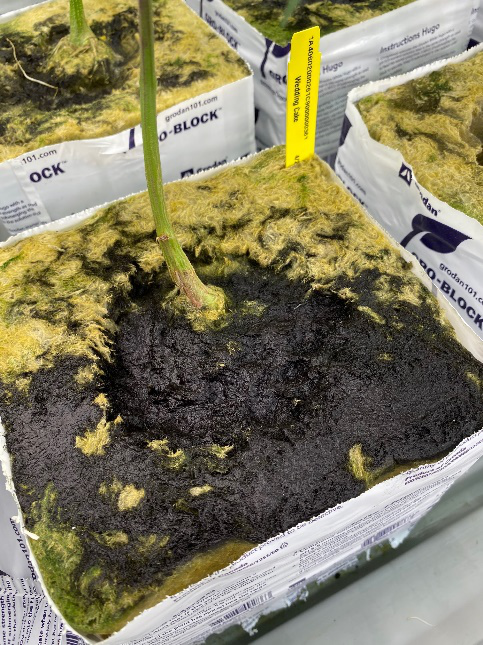
There have been too many instances of rushing into things and getting into problems.
Go slow and be cautious when starting something new with fertilizers.
Having a designated trial zone for testing is preferable to running straight into production.
*Could this issue have been eliminated with better controls and testing?
-It’s better to avoid issues altogether than have to fix them once they occur.
Start by mixing stock tanks. Ensure colors, precipitation, pH, etc. match your jar test.
You can also take a sample and dilute it in a set amount of water to get confirmation of EC.
Once stock tanks are prepared it’s time to begin feeding plants.

*Stock tanks in irrigation water room being filled by a Netafim Netaflex 3G Fertilizer Dosing System.
We always tell our customers to elevate several plants and collect runoff.
This runoff should be analyzed for EC, pH, and volume, and a log should be kept (Daily) for this information as well as total daily volume of feed.
Divide by the number of plants to get the per plant volume.
| DATE | pH | EC | Runoff Volume (1 plant) | Total Volume |
| 10/10/2025 | 5.2 | 3.7 | 150 ml | 1500 ml |
*Example for data logging daily irrigation-
There are elaborate devices and technology that assist farms in monitoring water content, EC, runoff volume, and total volume, such as the Paskal DrainVision Plant Scale. This complete system-

*Paskal DrainVision Plant Scale provides crucial data including water content by weight, EC, run-off volume, total irrigation volume, and graphs to visually illustrate this to the grower.
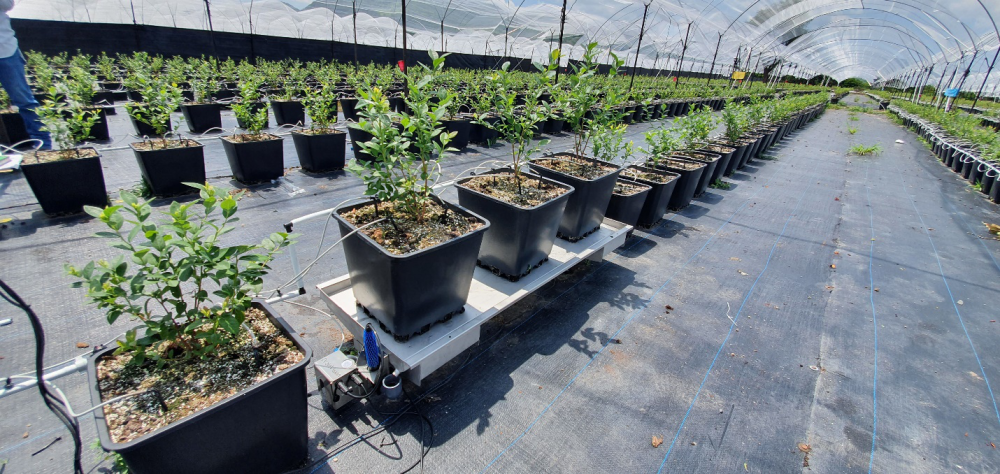
*Harvesting data on a single zone provides a wealth of information that can be used across various zones, plant strains, and growing conditions. Too much data can be counterproductive.
PERFORM A RUN-OFF TEST-
Now that fertilizers are in production it is time to take a sample of the run-off and send it off for testing. This will allow for comparison between clean water tests, fertilizer solution tests, and pest drainage tests. If too much or little NPK and micros are showing up in run-off it could be time to make an adjustment.
Alternatively, we have often found issues that would not have been clear without a run-off test and would not have shown up in pre-irrigation tests. One such instance was when condensate water was being recycled and caused biological growth and issues with heavy metals. Another was with dirty coco coir growing media that was causing crop health issues and binding with calcium.
BEST PRACTICES FOR MIXING WATER-SOLUBLE FERTILIZERS-
*Working with the largest and most productive farms in North America has taught us a lot about proper operating procedures and how to effectively work with water soluble fertilizers drama free. It’s important to properly agitate water when mixing in fertilizers. Some fertilizers are slightly hydroscopic and will initially resist going into solution. These fertilizers require ample agitation and slow pouring into solution to ensure they fully dissolve.
 There are several options to aid when dissolving fertilizers:
Netafim NutriSolve – This is a nutrient dissolving system that sprays the dry salts until they begin dissolving and drop into a 423-gallon reservoir that then recirculates the salts in a chaotic manner that fully dissolves them.
The cost is approximately $10,000.
*Netafim NutriSolve reservoir with distribution valves and pump-
Aquagation Mixing Tanks – This is a 250-gallon reservoir with a propeller style mixing pump.
Pour in salt, let the tank mix, distribute them to the proper stock tanks, and dump any undissolved salts.
The cost is approximately $7,000.
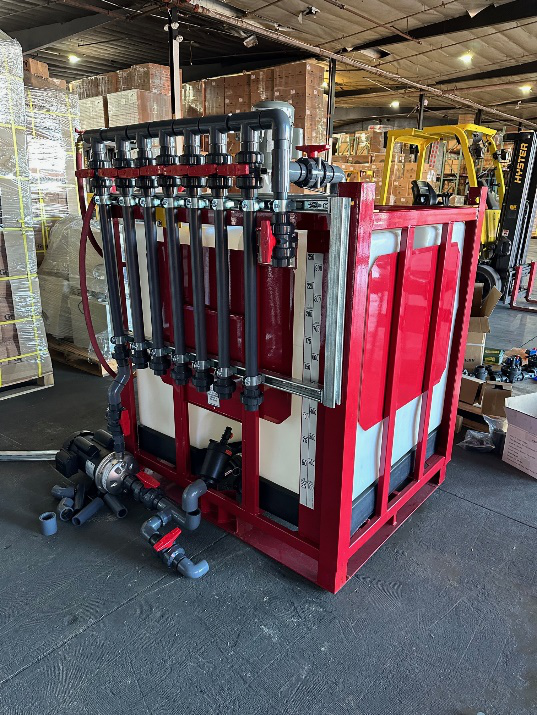 *Aquagation Mixing Tank with distribution valves and pump-
Standard Tank Mixing – Select a reservoir, fill it with water, add salts, top it off, mix it up with a pump or propeller mixing drill.
Pump out dissolved salts, dump undissolved salts. This method takes the most amount of time and labor which adds up on an annual basis.
It’s important to time how long the process takes and calculate time spent on an annual basis to determine payback when purchasing an automated dissolution system.
The cost is approximately $500.
*Hand mixing stock tanks with a drill- It is always best to measure inputs using weight as your guide.
This is the safest way to ensure proper measurements are used and mistakes are avoided.
Scales should be calibrated frequently, and a test weight should be present to ensure calibration is accurate.
*Weighing water soluble nutrients on an Ohaus scale-
When full bags can be used, they should be used. Selecting stock tanks that allow workers to use full bag quantities saves time and avoids mistakes.
A 55-gallon poly drum is a common stock tank for smaller sized facilities since 50 gallons of water would hold 100 pounds of fertilizer at 2 pounds per gallon. This would be 2 full 50 Pound bags of fertilizer or 4 bags when using 25 Pound bags.

Installing and utilizing proper water filtration is another best practice. We recommend a main filter for the irrigation system that is around 120 Mesh and depending on farm size (Over 1 acre) should have automatic backflushing. By using a main filter that preemptively cleans itself the concern for worker neglect of scheduled cleanings is eliminated.
Since most insoluble particulates will be removed by the main filter, we can now utilize smaller, manual filters downstream on each zone for additional drip emitter protection. Depending on flow rates we generally recommend 3/4-Inch or 1-Inch filters, either disc filters or screen mesh filters, in 120 to 200 mesh.
*Growers using Mixrite or Dosatron Water Driven dosing pumps often utilize 55-gallon poly drums for stock tanks.
WATER SOLUBLE FERTILIZER PURITY TESTS-
Many growers ask us which salts they should use and how can they determine purity. There are several methods that can assist in the fertilizer selection process.
- Brands – There are some brands known as more soluble and others that will work but contain greater levels of impurity. Haifa Chemicals, Khemical Corporation, and Brandt are all high solubility and strong price points. Additionally, they have a broad range of options and a wide selection so many inputs can be obtained from a single source.
- Jar Test – Putting inputs into solution on a small scale, measuring and monitoring the solution, and checking solubility is one of the most common ways of determining solubility, purity, and checking for precipitation.
- Dehydration – By putting salts into solution and then performing a dehydration test you can check the crystal structure and learn about the purity of your salts.
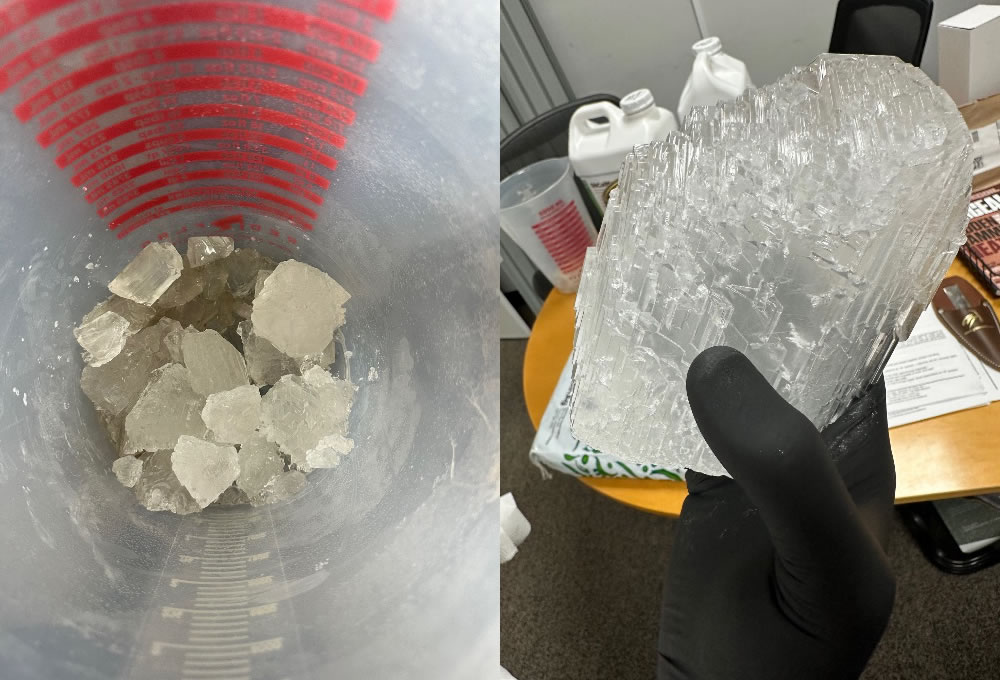
*Small, brown crystals were formed when dehydrating Yara Calcium Nitrate verses one solid clear crystal with Americal Calcium Nitrate. The lack of impurities in Americal created a more cohesive bond.
- Let salts sit in direct sunlight for an extended period to monitor biological growth. Water, nutrients, and direct sunlight create the perfect environment for biological growth. This issue can occur with high purity fertilizers and lead to clogging issues and performance problems.

*Drip irrigation is comprised of small orifices, check valves, micro tubing, and drip stakes that are susceptible to clogging. Everything possible should be done to prevent clogging and ensuring longevity of use.
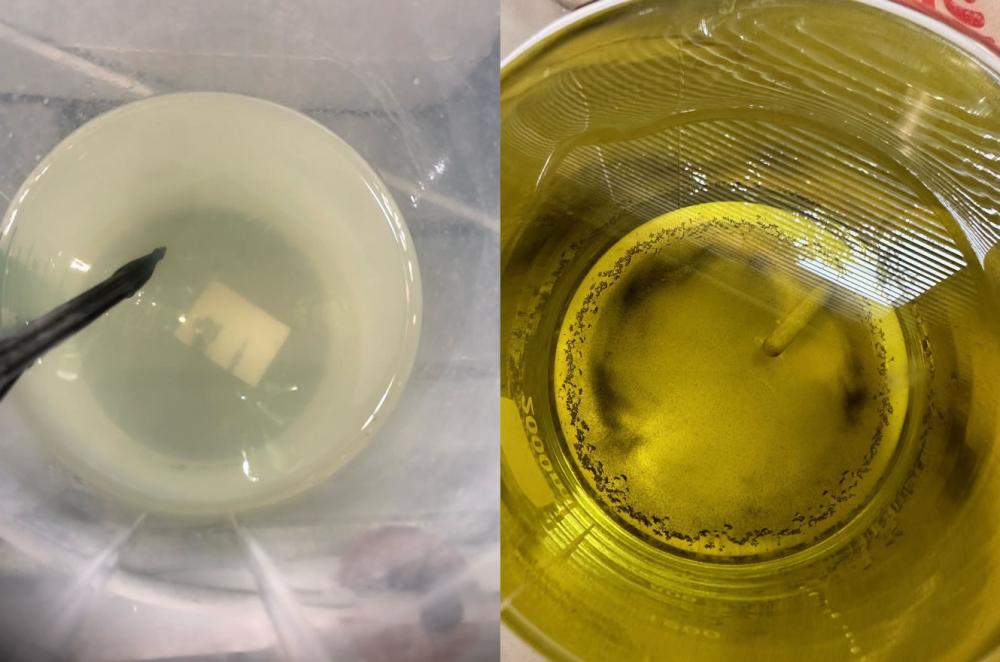
*Cloudy nutrient solution that when given time will settle out of solution.
**Small black particulates from improperly manufactured magnesium sulfate that led to many clogged drip emitters.
Sometimes salts appear to be in solution just after being mixed but rather than dissolving into solution, they are simply suspended in solution. When given time to settle they will reappear on the bottom of the container.
 This can be problematic and lead to clogging or missed nutrient targets in hydroponics or soil-less media farms.
Often, nutrient mixes with suspended particulate that is undissolved, will appear milky colored or cloudy until the particles settle out of solution. When making extremely large stock tanks there will inevitably be larger quantities of impurities. It is good practice to solubilize fertilizers in a reservoir first, pump out the soluble solution, and dump the impurities. This will ensure no impurities enter the irrigation system and will mitigate clogged emitters and damage to pumps and equipment. By solubilizing in a reservoir and dumping impurities this farm nearly eliminated clogged drip irrigation emitters.
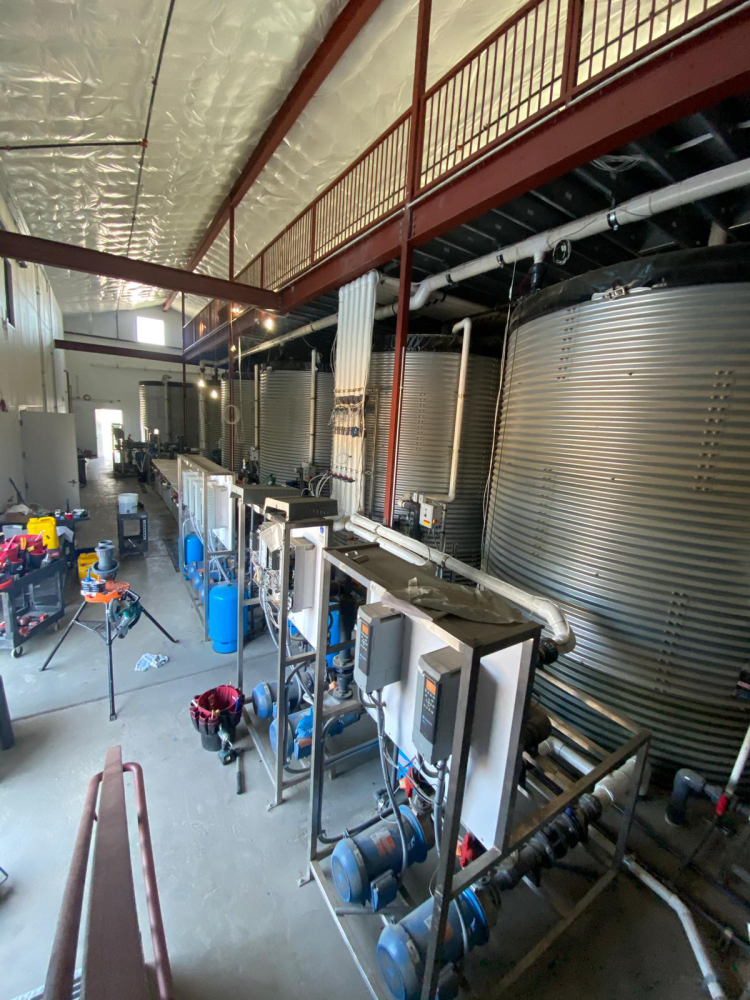
*Large stock tanks that hold fertilizers for several weeks.
IN CONCLUSION-
Farms are constantly influx and trying to keep up with technology, cost cutting, and employee turnover. New growers, new techniques, and changing SOP’s bring new challenges. Understanding how to evaluate new fertilizer products and approaches can make the difference between success and bankruptcy.
Should you desire to mix your own salts or move from mixing your own salts to a high-purity, low cost, preblended product, please let us know. At MORR we have chemists, plant scientists, and fertilizer experts available to assist you in determining which direction your farm should go. Most approaches to fertilizers are good but that is only when it is the right fit for the right farm. Contact us today and ask for a MORR technical representative.
To see the full offerings available through MORR visit www.MORR.com or call our office and ask for a technical sales representative.

About
MORR Inc.
MORR Inc. is a wholesale commercial agriculture distributor for planting, growing, and farming located in Los Angeles, CA. MORR Inc. supplies top of the line wholesale commercial hydroponic systems, commercial grow systems, a wide selection of grow lights and automated control systems, nutrient rich soils and growing media, a large selection of specialized advanced plant nutrients for different plant life cycles, dosing and drip irrigation systems, high tech environmental meters and automated systems, fans, filters, plant pesticides, plant fungicides, automated crop management systems, general commercial grow facility supplies and services, plus much more!
Call- 1-310-967-2022