Growing Crops Free of Insect Pests
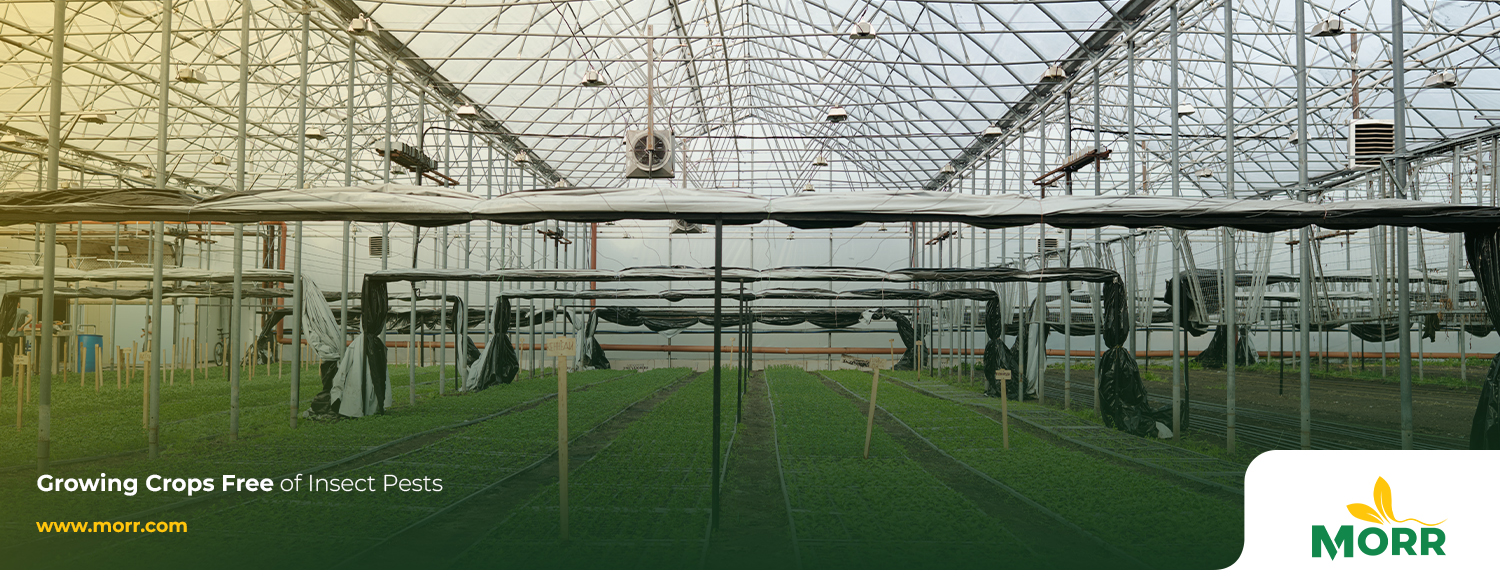
Growing Crops Free of Insect Pests
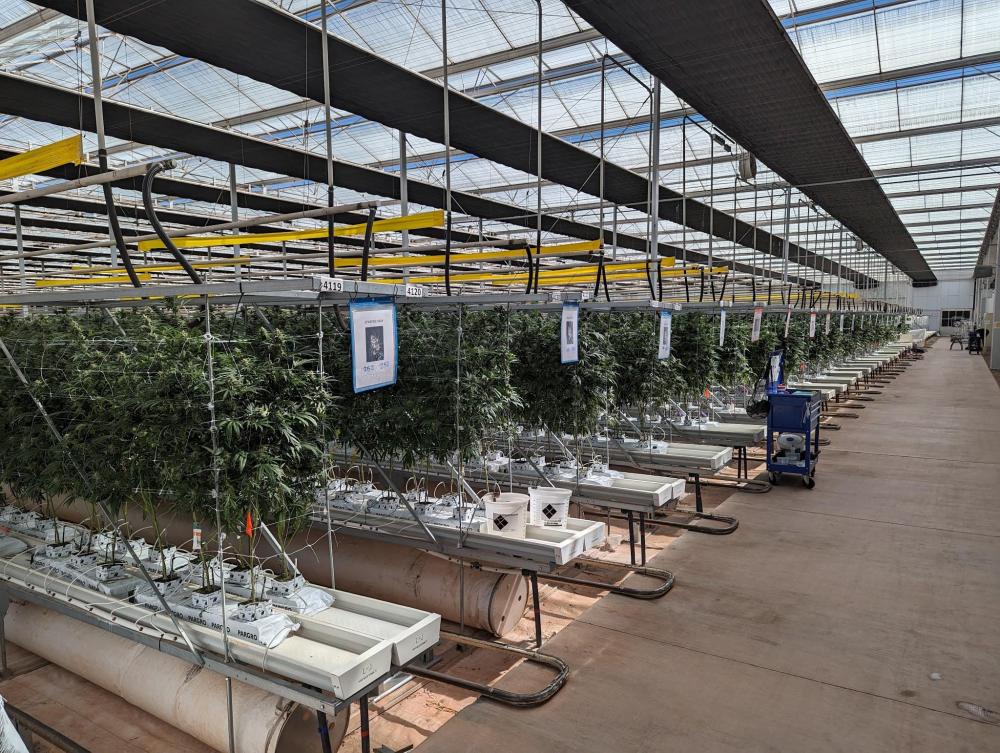 In the United States, insecticides for use on sensitive crops such as tomatoes, cucumbers, sweet peppers, and hemp, are limited to those that conform with the Environmental Protection Agencies (EPA) regulations for Minimum Risk Pesticide Products. The EPA has determined that certain "minimum risk pesticides" pose little to no risk to human health or the environment. Those pesticides are labeled as 40 CFR 152.25(f), 25(b) exempt.
The categories of pesticide products that qualify as minimum risk include detergents, soaps, oils, herbs like citronella or cloves, acids, micronized minerals, and even dried blood. Many products on the market are combinations of these approved ingredients.
Growing specialty crops, exotic fruits, and other rare varieties are different from growing row crops because this produce is sold in the marketplace based on smell (terpenes), physical characteristics such as look and color, size and weight, and perceived value (brand, named hybrid, indoor grown/greenhouse/outdoor, etc.). The challenge to the grower is to make sure the crop maximizes weight, is full of crystals or other enhancements, rich in terpenes, free of contaminants or particulate deposition, and passes the required lab tests.
Additionally, some crops have characteristics that are unique and present additional challenges. For example, hemp is a sticky plant. Granulated and or oil-based products will aggregate on leaves, and flowers and may persist on the plant foliage, suppress plant vigor, and harvest value. In acknowledgment of this, it is common in the industry to use these products only during the vegetative period and not during the flowering stage. Quite often, this leads to late-term pest infestation. It is best to keep the crop clean from insect pests with insecticides that can be used through harvest if necessary.
Horticultural soaps have been around since before history was taking note. Soap can form spontaneously in fire pits where fats from cooking meat get mixed over time with wood ashes and water. An unnamed genius realized that soap removed and killed lice, fleas, and ticks. It was an explainable miracle that soon replicated across human culture until someone in Babylon thought to write down the recipe over 4000 years ago. Since then, the formulas have been refined and perfected.
Chester Boone’s Horticultural Pesticides are custom soaps made from a superior modern formula, with active citric acid. They have been developed to provide effective relief from agricultural insect pests, to be legal and appropriate to use, to be strongly value-based, and to be safe for the grower and consumer. They can be used up to the day of harvest.
Chester Boone's comes in two formulas:
Chester Boone’s All Purpose is very effective on all soft-bodied insect pests, eggs, and larvae. All Purpose has added sorbic acid working as a mildewcide and fungicide.
Chester Boone’s Pure is formulated with the addition of stronger citric and fatty acids found to be more effective on adult hard-bodied insect pests and is without an added fungicide. It provides excellent control for hemp or spider mites as well as a range of other bugs and crop types. Pure provides a superior emulsion when tank mixed with beauveria bassiana or bt.
It is best to grow a clean crop, from start to finish.
The basics are the same if you grow many plants or just a few.
Maintain good light and abundant airflow, keep it clean and neat, and have water and nutrition only where you want it.
Steps for success:
- Establish a hygiene regime from start to finish.
- Monitor any insect pests with sticky insect tape rolls or cards.
- The cleaner you keep your area, the easier it is to monitor and control pest outbreaks.
- Always use clean water to mix with. Rainwater, distilled, or reverse osmosis water is preferred. Heavy-hard well water or silty river water may be detrimental.
- Do not PH down or up. Just mix with clean water and use.
Common greenhouse crops have many insect pests including:
Piercing-sucking insects such as aphids, thrips, hemp mites, and spider mites. scale and whitefly. These insects pierce plant cells and suck out liquid nutrients. This is detrimental to harvest potential and may be a vector for viral disease.
For normal pest-free maintenance, after seedlings or cuttings are well established (10+ days), use 1/2 or up to one fluid ounce of ALL PURPOSE per gallon of water and spray or fog over and under leaves and stems to remove any insect pests and maintain crop in optimum condition. Spray again in 5 to 7-day cycles.
For control of abnormal insect pest outbreaks, spray 1/2 a fluid ounce of PURE per gallon of water once a week in addition to 1/2 or up to one fluid ounce of ALL PURPOSE per gallon of water once a week.
Example: Spray or fog ALL PURPOSE on Monday and spray PURE on Thursday and ALL PURPOSE again on Monday and PURE again on Thursday and continue until the outbreak is controlled. Continue to spray ALL PURPOSE in 5 to 7-day cycles up to harvest if necessary.
Chester Boone’s is a contact insecticide. For control, insect pests must be wet with spray.
Some crop varieties are more delicate than others. For delicate varieties, seedlings, or young cuttings, use only half a fluid ounce of ALL PURPOSE per gallon of water. Test first to be sure.
Based on trials and user data please find below some of the rates and product combinations that have worked for other growers. We make no off label recommendations and a qualified PCA or crop adviser should be consulted prior to use.
Root-dwelling insects like root aphids or mealy bugs and persistent thrips infestation. These crop pests can best be controlled by tank mixing beauveria bassiana with 1/2 a fluid ounce of PURE per gallon of water and spraying the lower plant stem and the top of the soil or growing media. Repeat twice weekly for three weeks and after that once a week. Maintain regular spray maintenance on plant foliage with ALL PURPOSE in 5 to 7-day cycles.
Do not spray the plant foliage with Beauveria bassiana, just wet the bottom of the stem and the media.
Chewing insects - Caterpillars, loopers, cutworms. kolo worms, and other crop worms. Chester Boone’s targets “piercing-sucking bugs” but you need to add BT-K for the “chewers” (Bacillus thuringiensis ssp. kurstaki).
Use 1/2 fl oz of Chester Boone’s PURE with one gallon of water and tank mix with BT-K for control. Follow label directions. Use PURE, not ALL PURPOSE..
Chester Boone’s PURE will suppress contacted insect pests and act as a spreader-surfactant to power the residual efficacy of the BT-K. Choose a liquid suspension of BT-K (Thuricide BT), not a powder or dust.
The timing of this application is critical. Observe your plants closely, and spray to wet plants when you first see insects beginning to feed. Repeat in 5 to 7 days as needed.
Powdery Mildew (PM)
PM is common in many crops and cannot be tolerated due to its adverse effect on the plant itself as well as on the produce. Crops need to be brought to harvest absent of any fungal, bacterial, viral, or chemical adulterant.
Chester Boone’s All Purpose was formulated to provide an effective solution to PM, as well as provide insect pest control and maintenance. Chester Boone’s is a custom-made horticultural soap with active citric acid. It safely removes insect pests and mildew and leaves the crop clean.
- Mix ½ or up to 1 fl oz of ALL PURPOSE with 1 gallon of water and spray or fog over and under leaves and the whole plant. Just wet it, you don't need to drench it.
- Maintain regular spray maintenance on plant foliage with ALL PURPOSE in 5 to 7-day cycles.
Crops need exercise. Good cultural practices include maintaining sufficient air movement to rustle and move foliage lightly. Remove lower leaf growth and any infected plant material. Keep the area clean and prevent standing water or floors wet with nutrients. If problems persist, increase air movement, prune or spread out the plants, and double down on hygiene.
Precautions: Minimize your exposure to pesticides. Avoid contact with eyes. Always read labels for additional directions.
Chester Boone’s is not a universal insecticide. This is good and by design. It allows the preservation of beneficial insects in the garden. It also means that not every insect will be bothered. Small, soft-bodied insects are the best candidates for control, like aphids, thrips, mites, scale crawlers, whiteflies, and many others. Sturdy, large-bodied insects like locusts, grasshoppers, beetles, and bees are unlikely to be affected.
For any follow-up questions, comments, or concerns please call our office at 855-TRY-MORR (855-879-6677). Additionally, the formulator, Walker Sanders, has his personal phone number on every bottle and is available for questions and free advice.
Click here for more information about Chester Boone's All Purpose Insecticide, Miticide, and Fungicide
Click here to find out more information about Chester Boone's Pure Power Insecticide and Miticide

About
MORR Inc.
MORR Inc. is a wholesale commercial agriculture distributor for planting, growing, and farming located in Los Angeles, CA. MORR Inc. supplies top of the line wholesale commercial hydroponic systems, commercial grow systems, a wide selection of grow lights and automated control systems, nutrient rich soils and growing media, a large selection of specialized advanced plant nutrients for different plant life cycles, dosing and drip irrigation systems, high tech environmental meters and automated systems, fans, filters, plant pesticides, plant fungicides, automated crop management systems, general commercial grow facility supplies and services, plus much more!
Call- 1-310-967-2022