Fertigation: Enhancing Crop Growth Through Precision Feeding
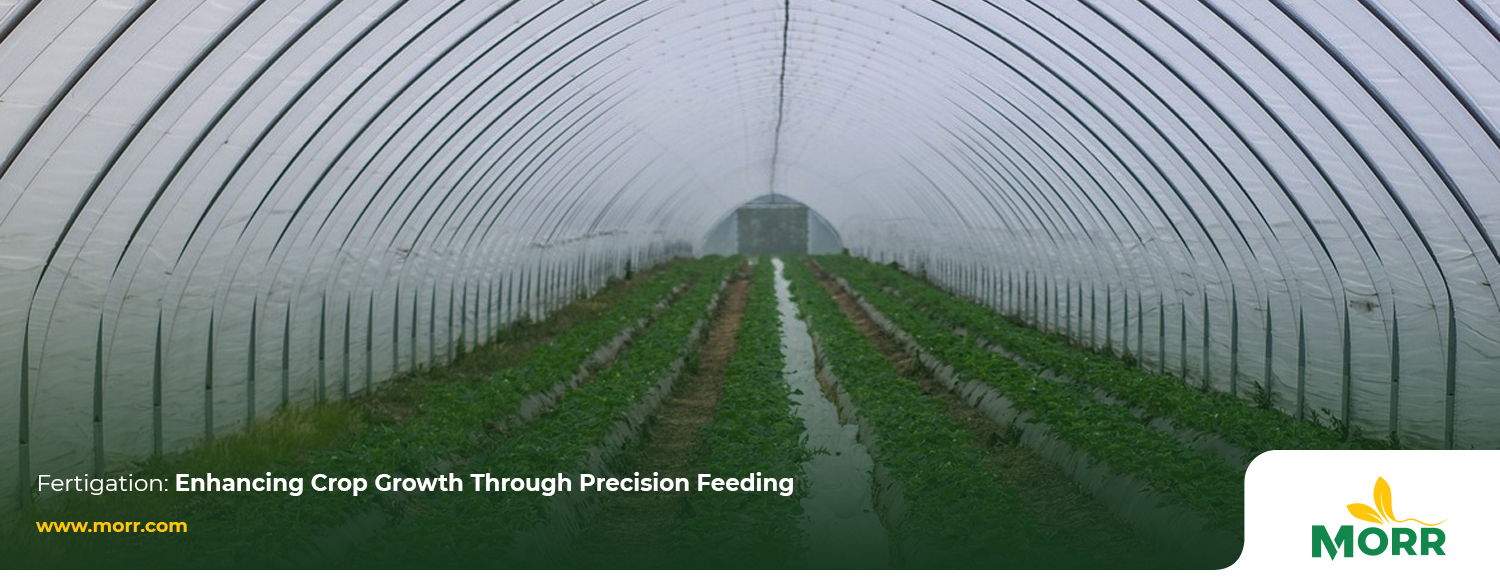
Fertigation: Enhancing Crop Growth Through Precision Feeding
Fertigation is the process of merging irrigation and fertilization to optimize nutrient delivery and enhance crop productivity. Fertigation leverages the hydraulic efficiency of irrigation systems to precisely administer water-soluble fertilizers directly to the root zone, where they are readily absorbed by plants, and enable farmers to adjust nutrient formulations, application rates, and timing based on crop requirements, soil characteristics, and environmental conditions.
The Most Widely Used Fertigation Techniques
Growers can optimize nutrient delivery, promote healthy crop growth, and maximize yields while minimizing environmental impact using the four most common fertigation methods: continuous application, three-stage application, quantitative fertigation, and proportional fertigation.
1. Continuous Nutrient Application
Continuous nutrient application involves the constant delivery of fertilizers throughout the irrigation cycle. This method ensures a steady supply of nutrients to plants, promoting consistent growth and development. Continuous fertigation is well-suited for crops with high nutrient demands or those grown in nutrient-poor soils. By maintaining optimal nutrient levels in the root zone, continuous fertigation helps minimize nutrient fluctuations and ensures efficient nutrient uptake by plants.
2. Three-Stage Fertilizer Application
The three-stage fertilizer application approach divides the fertigation process into three distinct stages: pre-planting, vegetative growth, and reproductive growth. During the pre-planting stage, fertilizers rich in nitrogen, phosphorus, and potassium are applied to prepare the soil and provide essential nutrients for seed germination and early root development. In the vegetative growth stage, nitrogen-rich fertilizers are applied to support leafy growth and canopy development. Finally, during the reproductive growth stage, fertilizers high in phosphorus and potassium are applied to promote flowering, fruit set, and overall crop yield. By tailoring nutrient applications to different growth stages, three-stage fertigation optimizes nutrient availability and promotes balanced crop growth.
3. Quantitative Method of Fertigation
The quantitative method of fertigation involves calculating the precise amount of fertilizers needed based on crop nutrient requirements, soil analysis, and irrigation water quality. This method relies on accurate measurement and calibration of fertigation equipment to deliver the correct concentration of nutrients to the crop root zone. By adjusting fertigation rates according to crop nutrient demand and environmental conditions, the quantitative method ensures efficient use of fertilizers and minimizes nutrient losses through leaching or runoff. Implementing precise nutrient management practices allows growers to optimize crop yields while minimizing environmental impact.
4. Proportional Method of Fertigation
The proportional method of fertigation involves maintaining a constant ratio of water to fertilizer throughout the irrigation cycle. Fertilizer injectors or proportioners are used to automatically adjust the flow rate of fertilizers based on changes in water flow, ensuring consistent nutrient delivery. This method is particularly well-suited for drip irrigation systems, where precise control over nutrient application rates is essential. By maintaining a proportional relationship between water and fertilizer, growers can achieve uniform nutrient distribution across the field, promoting even crop growth and maximizing fertilizer efficiency. The proportional method of fertigation offers a simple yet effective approach to nutrient management, especially in systems with fluctuating water flow rates or varying crop nutrient requirements.
Alternatives to Fertigation
While fertigation offers many benefits, there are certain scenarios where it may not be the optimal choice for growers:
- Limited Access to Irrigation Infrastructure: Fertigation requires access to reliable irrigation systems capable of consistently delivering water and nutrients to crops.
- High Soil Salinity: In areas with high soil salinity levels, fertigation may exacerbate salt accumulation in the root zone, leading to plant stress and reduced yields. In such cases, leaching or gypsum application may be more effective in mitigating salinity issues.
- High Initial Investment: Implementing fertigation systems requires a significant initial investment in infrastructure, equipment, and training. For small-scale or resource-constrained growers, the upfront costs associated with fertigation may outweigh the potential long-term benefits.
- Limited Crop Suitability: While fertigation is widely applicable across a range of crops, certain species may be less suited to this method of nutrient delivery.
- Complexity and Maintenance Requirements: Fertigation systems require regular maintenance and calibration to ensure proper functioning and nutrient delivery. Growers without the technical expertise or resources to maintain fertigation equipment may struggle to implement and manage these systems.
- Environmental Considerations: In environmentally sensitive areas, fertigation may raise concerns about nutrient runoff and water pollution. Growers must adhere to strict regulations and best management practices to protect the environment.
Alternative methods of nutrient application include broadcast fertilization, foliar spraying, and soil drenching. Each method has its advantages and limitations and should be chosen based on factors such as crop type, soil conditions, and resource availability.
Common Fertigation Challenges & How to Overcome Them
Fertigation presents several challenges that require proactive management to achieve optimal results.
1. Clogging of Irrigation Systems: The precipitation of nutrients and the accumulation of debris can clog emitters, drip lines, and filters, disrupting the uniform distribution of water and fertilizers.
Solution: To mitigate clogging, regularly flush the irrigation system with clean water to remove sediments and precipitates. Installing high-quality filtration systems can also prevent particulate matter from entering the system. Additionally, using water-soluble fertilizers with low impurities and avoiding mixing incompatible fertilizers can reduce the risk of clogging.
2. Uneven Nutrient Distribution: Achieving uniform nutrient distribution can be challenging, particularly in large or uneven fields, leading to nutrient deficiencies or toxicities in different areas.
Solution: Implement precision agriculture technologies, such as soil moisture sensors, GPS mapping, and variable rate fertigation systems, to tailor nutrient applications based on spatial variability within the field. Regular monitoring and calibration of the fertigation system ensures consistent nutrient delivery.
3. Water Quality Issues: Poor water quality, including high salinity, pH imbalances, or the presence of contaminants, can affect nutrient solubility and uptake.
Solution: Conduct regular water quality testing and treat irrigation water if necessary. Techniques such as acidification, filtration, and desalination can improve water quality. Selecting fertilizers compatible with the specific water conditions can also help mitigate issues.
At MORR Inc., we are dedicated to empowering growers with advanced agricultural solutions. Our comprehensive range of products and services is designed to meet the unique needs of modern farming operations, ensuring optimal nutrient delivery, water efficiency, and crop productivity. We offer cutting-edge fertigation equipment, precision agriculture technologies, and expert support to help farmers design and implement fertigation systems effectively. By partnering with Morr Inc., growers can access the tools needed to maximize their agricultural potential, improve sustainability, and achieve superior results – at wholesale price.

About
MORR Inc.
MORR Inc. is a wholesale commercial agriculture distributor for planting, growing, and farming located in Los Angeles, CA. MORR Inc. supplies top of the line wholesale commercial hydroponic systems, commercial grow systems, a wide selection of grow lights and automated control systems, nutrient rich soils and growing media, a large selection of specialized advanced plant nutrients for different plant life cycles, dosing and drip irrigation systems, high tech environmental meters and automated systems, fans, filters, plant pesticides, plant fungicides, automated crop management systems, general commercial grow facility supplies and services, plus much more!
Call- 1-310-967-2022