Calibrating and Managing Pesticide Sprayers
Calibration & Operation of Sprayers
Before selecting the sprayer to use, check the label and the IPM (integrated pest management) guidelines for the pesticide that will be applied. These give the recommended application rate, the type of equipment best suited for the application, the style of nozzle and other information for best results. Based on the type of crop and its size, select the commercial pesticide sprayer that will give a good balance between droplet size and coverage.
Calibrating sprayers is important to get good control without applying excess material. Low-volume sprayers can provide more uniform coverage with less spray material. Where applicable, most labels have recommendations for low-volume equipment.
When making a tank mix, both the dosage and water requirement need to be considered. The dosage, the amount of chemical that should be applied to a given area, is listed on the label. With most commercial pesticides, a range such as 4-12 oz. per 100 gal. is given. Selection of the rate should be made based on the level of infestation, type and maturity of the crop, experience, and other variables. If this is the first time that the pesticide is being used, a dosage in the middle of the range is a good starting point.
The amount of water needed to cover the growing area depends on the type of equipment used. With hydraulic sprayers, a rate of 25 to 50 gallons per 10,000 sq. ft. is common. Low-volume sprayers use only ¼ to 2 gallons per 10,000 sq. ft.
Most chemical labels state the amount of pesticide to be diluted in 100 gallons of water and not the amount of spray concentrate that is to be applied to a given area. Some labels now list the amount of chemical that should be applied per acre. The instruction manual that comes with each sprayer contains charts or tables that help determine how much spray material to mix with the water. This is usually based on a 10,000-sq. ft. area, so you will need to adjust the rate to fit the growing area to be sprayed.
Summary For Calibration & Operation of Sprayers:
-
Read the label and guidelines for the pest control or fungicide product that will be applied to the crop.
-
Be sure to identify the following:
-
Application rate
-
Type of equipment best suited for application
-
Style of nozzle
-
Worker Re-Entry Interval (REI) and safety measures
-
-
Based on the type of crop and its size, select the sprayer that will give the best balance between coverage and droplet size.
-
Determine dosage and water requirements listed on the label
-
For example, 4-12 Ounces per 100 gallons
-
Rate is based on severity of infestation, type and maturity of crop, historical experiences, etc.
-
For trials or initial exposure to new products dose in the middle of the range
-
-
The amount of water needed to cover the growing area depends on the spray equipment being used
-
For hydraulic sprayers a rate of 25-50 gallons per 10,000 SF is common
-
For low volume sprayers use ¼ gallon to 2 gallons per 10,000 SF
-
Spraying Technique
The technique you use to spray crops is very important to get good coverage. It should be developed to fit the type of equipment that is to be used. With a hand-held gun, a sweeping motion over the foliage will allow the spray material to penetrate and get to the underside of the leaves.
With fixed-fan type units, an airflow pattern needs to be established so that all the plant canopy receives the pesticide; location of the unit contributes to good air flow. Using an airflow and circulation system, such as HAF, will enhance the movement and distribution of the fog and mist particles.
The fans should continue to operate for 30-60 minutes after the spraying operation is completed.
Observation should be made to ensure that the sprayer is operating correctly, and that sufficient coverage is obtained. A good way to monitor coverage with a hydraulic or mist sprayer is to use strips of water-sensitive paper from a local spraying equipment supplier. The paper is attached to representative leaves in the plant canopy. When exposed to spray droplets, stains will appear indicating the size and number of particles that were received by the leaf.
For fog applications, evaluation of coverage can be made using a fluorescent dye in the water. Placing representative leaves under an ultraviolet or black light will show droplet size and distribution.
Another tool that can help promote better technique and coverage is to keep a log of the spraying operations and the results that were obtained. This should include the date, time, and location of application; crop and pest; pesticide used; tank mix; and an evaluation of the results obtained.
Adjustments should be made in subsequent applications to try to improve the results.
Proper selection, calibration and operation of spray equipment is important in achieving optimal pest control, as well as in meeting environmental and safety requirements.
It is important not to overspray when dealing with crop pest control treatments. This refers to frequency as well as amount. When pests are identified and the determination to spray has been made, it’s important to only spray what is needed and space applications sufficiently to prevent crop damage.
The amount of spray should only be what is necessary to affect the pest population. Therefore, it is important to spray the areas where that particular pest is located. This can be the root zone, under the leaves, or at the top of the crop, depending on the pest.
Additionally, it is often counterproductive to spray so much water and pesticide that the plants are dripping. Coverage is key and not putting more water and pesticide than necessary on the crop saves money and prevents crop damage. Dripping plants are generally over sprayed plants.
Monitoring With Sticky Traps
Trapping can be an efficient and informative monitoring tool. Traps can alert growers to pests early before crop damage occurs and before pests become abundant and more difficult to control.
Yellow Sticky Traps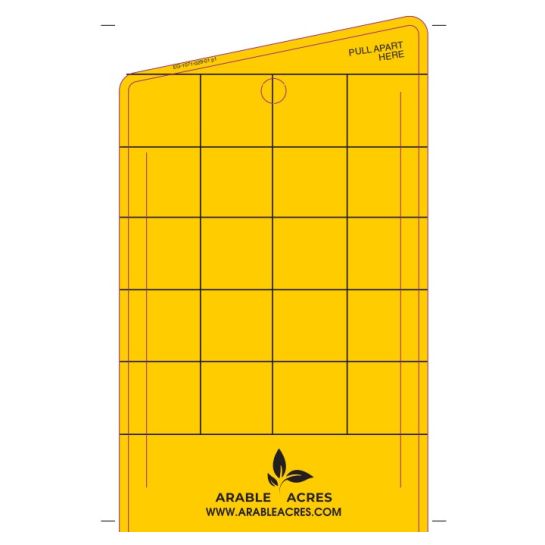
Yellow cards (commonly 3 × 5 inches or larger) covered on both sides with sticky material attract and capture the adults of variousflying insects. Commercial sticky bug traps can indicate localized spots of high pest abundance or periods of migration of adult pests into crops and the predominant direction from which they are arriving (e.g., from an adjacent field of drying weeds). Traps can also provide a relative measure of insect abundance; comparisons of the number of adults caught among sample dates can indicate whether pest density is decreasing, increasing, or remaining about the same over time. Pests captured by yellow sticky traps include adults of fungus gnats, thrips, and whiteflies, aphids, psyllids, and sharpshooters. Others presented side-by-side for comparison in Sticky Trap Monitoring of Insect Pests include leafminers, shore flies, and adults of certain parasites and predators.
Blue sticky traps are sometimes used for thrips because this color is more attractive to thrips. However, insects are more difficult to discern and count in blue traps. Yellow sticky traps attract a wider variety of pest insects and are recommended for most situations.
Sticky traps may not be a good tool for deciding treatment need, whether any action thresholds are exceeded, and they are generally not effective for direct control. Immature stages feeding on crops commonly cause the most damage; sticky traps typically capture only airborne adults, which in many species do not feed on plants. Adult trapping sometimes is not a reliable indicator of pest presence or abundance on the crop. Many of the trapped adults may be migrating species that don't feed on the crops being grown. Adults often cannot readily be discriminated against species; for example, the adults can obviously be aphids but whether they are aphid species that infest the crops present may not be discernable from specimens stuck in sticky material. Always use traps in combination with visual inspection of plants for the presence of damage and pest feeding stages.
Unless other guidelines are recommended use at least one sticky trap per 10,000 sq. ft. of growing area. When monitoring whiteflies, use about one trap per 1,000 sq. ft. of growing area with crops susceptible to infestation. Actual trap density will be dictated by the growing area and the time and effort devoted to trapping. But each pest management unit should have at least one, well-maintained, yellow sticky trap. In addition, put one trap inside growing areas by doors and vents to detect pests migrating in. Also put at least one trap in each crop that is very susceptible to damage by pests and do not locate the most pest-susceptible crops near doors. Use bright yellow traps, each 3 × 5 inches or larger and covered with sticky material.
Orienting traps horizontally (facing the soil or upwards) is sometimes recommended when monitoring pests such as fungus gnats and shore flies that emerge from or rest upon growing media. However, to catch a wider range of targeted insects, orient the longest part of the trap vertically (up and down). Place each trap so that its bottom is even with the top of the plant canopy. For rapidly growing crops, locate trap bottoms a few inches above the canopy so that the plants do not overgrow the traps soon. As plants grow, move each trap up so that its bottom remains about even with the top of the canopy or somewhat higher. For example, use one or two clothespins to attach each trap to a bamboo post or wooden dowel embedded in the growing media or a stand. Alternatively hang traps from rafters or wires strung between posts.
Number each trap and map its location in your growing area. Inspect each trap at least once or twice weekly. It is easiest to replace traps each time you inspect them. Wrap traps in clear plastic film and take them to a more comfortable location for counting. Alternatively replace traps when they become too fouled to effectively capture insects or count them quickly. If traps are reused, note this because catches become cumulative; you must subtract the number of insects present the last time that trap was checked, or sum and average the counts from all traps in a specific growing area then subtract the previous average from that currently.
Count and record the number of each type of pest caught. When abundant it is not necessary to count all insects on the entire trap; counting the insects in a vertical column 1 inch wide on both sides of the trap, then multiplying the results by the trap width in inches, gives results that are representative of the entire trap. Do not reduce traps to 1-inch vertical strips because smaller traps will be less attractive to insects. Waterless hand cleaner can be useful for removing sticky material from hands.
Because many insects in traps may be beneficial or harmless, carefully identify insects before taking management actions. High-quality color photographs and line drawings of commonly trapped insects are available in Sticky Trap Monitoring of Insect Pests. You can also wrap used traps in clear plastic for better viewing without getting sticky or to bring for professional evaluation.
Interpreting Information From Yellow Sticky Traps
Regularly summarize trap data to facilitate comparison. For example, graph the average numbers of each pest in all traps from a particular growing area on each sample date. This allows visual recognition of trends in pest abundance and facilitates comparison to stages of crop growth and when management actions were taken.
Interpreting trap information requires knowledge, skill, and practice. Traps catch both migrating insects as well as adults that emerged from the crop. Canopy density, plant foliage quality, and temperature influence adults' tendency to fly. Wind and ventilation fans can discourage flight, reducing trap catches. The number of adults trapped may temporarily drop after a pesticide application even if there has been relatively little change in immature abundance on plants. Conversely, adult numbers of some species may temporarily increase in traps after applying an adulticide, so the numbers caught for several days after an application might not be best when comparing adult densities among sample dates.
Foliage disturbances, such as sprinkling with water (overhead irrigation) or shaking plants to promote pollination or monitoring adults (e.g., of whiteflies), increase trap catches. Even large numbers of pest species in traps do not necessarily indicate that control action is needed. Always use traps in combination with plant inspection to determine whether economically damaging numbers of pests and stages susceptible to control actions are present.
Sticky Tape Traps
Crawlers, the mobile first instars of certain Sternorrhyncha (formerly Homoptera), are the life stage most susceptible to many pesticides. Traps made of double-sided clear sticky tape (available at stationery stores) are an efficient method of monitoring crawlers of armored scales, foliar-feeding mealybugs, soft scale insects, and certain other arthropods. On each of several plants infested with adult females, snugly wrap a stem with tape. Double over the loose end of the tape several times so you can pull the end to easily unwind it. Place a tag or flag near each tape so you can readily find each tape trap. Change the tapes at regular intervals, about weekly. After removing the old tape, wrap the stem at the same location with fresh tape. Preserve the old sticky tapes by sandwiching each tape unrolled between a sheet of pale-colored or white paper and a sheet of clear plastic. Label the tapes with the collection date, location, and host plant.
Crawlers get stuck on the tapes and appear as yellow or orange specks. Examine the tapes with a hand lens to distinguish the crawlers (which are round or oblong, have very short appendages, and may have two dark eye spots) from contaminants such as dust, pollen, and spider mites. A contact kill insecticide and certain other pesticide types can be applied when crawlers are abundant. If a single application is planned, visually compare the tapes collected on each sample date. The best time for a single spray is after a sharp increase in crawlers in traps or soon after crawler numbers have peaked and begun to decline.
Establishing Action Thresholds
The presence of a few pest insects or mites and some amount of arthropod damage commonly is unavoidable and can be tolerated. The number of pests or level of damage beyond which management action should be taken is known as the action threshold, a fundamental concept in integrated pest management. When management action should be taken (when a threshold is exceeded) is determined by the total cost of the action (including monitoring), the value of the crop, and the impact on the environment. Few thresholds have been established for flower and nursery crops, in part because of the lack of research in comparison with the large number of crop plants, pests, and growing situations. Specific thresholds or management action guidelines may be developed over the long term by growers who regularly monitor crops, keep good records, and evaluate and summarize outcomes for comparison over time.
Why Use Thresholds
Pesticides sometimes are applied on a calendar schedule, when pest presence is only suspected, or when pest numbers are already high and difficult to control. Using thresholds can maintain or improve crop quality while reducing the cost and frequency of control measures. Less frequent applications help maintain pesticide efficacy by reducing the development of pesticide resistance. Fewer applications reduce the disruptions to cultural practices that occur during applications and the subsequent restricted entry interval (REI). In addition, fewer applications may improve plant growth and quality by minimizing phytotoxicity and increase profit by reducing costs of pesticide purchases, application labor, and regulatory compliance.
When To Take Management Action
Because crops are grown for profit, action thresholds are based largely on economics. Management action is warranted when the increased revenue expected from improved crop quality or yield will exceed the cost and adverse impacts (such as phytotoxicity, harvest disruption) of the action. The amount of pest damage or presence that can be economically tolerated is determined by many factors, including the type of pest and damage, crop species and cultivar, stage of plant development, time until harvest or sale, and market conditions. Tolerance to pests can be higher if infested plant parts are not marketed, such as older leaves on seed crops or cut flowers. Thresholds can often be higher if highly effective or quick-acting methods are available for controlling the problem. Conversely, if available controls are slow-acting or only partially effective, or crops are of an exceptionally high value, thresholds may be relatively low. In certain situations, regulations such as quarantines may impose zero tolerance for exotic organisms even when numbers are low, or an organism does not directly damage the marketed crop.
Mother stock and new plants should have virtually no pests. If pests are present at the beginning of the production cycle, many arthropods can develop through multiple generations resulting in large populations before plants are shipped. Abundant pests on young plants may require repeated management actions and greatly increase the likelihood of damaged, poor-quality plants.
Action thresholds may be higher for mature plants of certain crops. More mature plants are often better able to tolerate some level of certain types of pests or their damage. It is unlikely that susceptible crops can always be maintained pest-free throughout their production cycle. As crops mature, they may be increasingly likely to become infested and are often more difficult to treat effectively because of the risk of phytotoxicity to colored bracts or flowers, increased difficulty in achieving good spray coverage on larger plants, and pesticide reentry intervals relative to crop harvest or shipping.
If monitoring reveals very low pest abundance or damage near the end of production, it may not be necessary to take management actions because there may be insufficient time for populations to develop to problem levels before the crop is sold.
How To Establish Thresholds
Establish thresholds by regularly monitoring plants in a consistent and systematic manner. Keep good records and judge the acceptability of the finished crop in comparison with records of pest monitoring and management actions and the price received for the crop. Experiment over time to develop thresholds appropriate for your situation and market conditions. Be flexible in adjusting thresholds and adapt monitoring and management methods as appropriate.
Thresholds should be quantitative or numerical to be useful. For example, thresholds could be based on the
- Average number of pests per trap each week
- Percent of leaves or plants found to be damaged or infested during visual inspection
Quantitative thresholds can be developed for most pest monitoring methods, such as treating when certain conditions are conducive to disease development or when invertebrate pests or damaged plant parts exceed specified numbers or percentages. For example, management action may be warranted for whiteflies early in production when more than about 5 adults per trap per week are captured on one well-maintained 3-by-5-inch yellow sticky trap deployed per 1,000 sq. ft. of production. Thresholds for your situations may be very different.
For help with your pest control system, please contact us at 855-TRY-MORR.

About
MORR Inc.
MORR Inc. is a wholesale commercial agriculture distributor for planting, growing, and farming located in Los Angeles, CA. MORR Inc. supplies top of the line wholesale commercial hydroponic systems, commercial grow systems, a wide selection of grow lights and automated control systems, nutrient rich soils and growing media, a large selection of specialized advanced plant nutrients for different plant life cycles, dosing and drip irrigation systems, high tech environmental meters and automated systems, fans, filters, plant pesticides, plant fungicides, automated crop management systems, general commercial grow facility supplies and services, plus much more!
Call- 1-310-967-2022