
Aquagation Air Intake & Release Combination Valves


About this product
Air intake and release valves play a crucial role in irrigation systems, especially in commercial agriculture. These valves are designed to control the flow of air within the irrigation system, ensuring efficient and effective water distribution to crops. One of the key functions of air intake valves is to prevent the formation of air pockets or "air locks" within the irrigation system. Air pockets can disrupt the flow of water, leading to uneven distribution and potential damage to crops. By allowing air to enter the system, these valves help maintain a continuous flow of water, eliminating any potential obstructions and ensuring that water reaches every plant evenly.
Furthermore, air release valves are equally important in irrigation systems. They are responsible for releasing accumulated air from the system, preventing the buildup of excess air pressure. This is crucial as high air pressure can lead to bursting or damage to pipes, resulting in costly repairs and significant water loss. By releasing excess air, these valves help maintain the integrity and longevity of the irrigation system.
Effective air intake and release valves also contribute to the overall efficiency of the irrigation system. By ensuring a smooth and uninterrupted flow of water, these valves optimize water usage, reducing wastage and conserving this valuable resource. This is particularly important in commercial agriculture, where large-scale irrigation systems are employed to irrigate vast areas of crops.
By incorporating these valves into your irrigation system, you can ensure efficient and reliable water distribution, leading to healthier crops and increased yields.
Several common problems encoutered when operating an irrigation system are air lock, vacuum, and pressure build-up in the system.
What happens when air gets into an irrigation system?
Air lock primarily occurs when air is sucked in through a pump and becomes trapped in the system, generally at the high point in elevation. For example, if pipe runs up a wall, pierces through the wall, and drops back down into a greenhouse or grow room, air can easily become trapped at the high point where the pipe penetrated the wall.
To ensure air is able to vent from the system it is suggested to add air release valves after pumps, before flow meters, or at the high point of the system. This ensures air can excape and will not disrupt the normal system function.
Where should air relief valves be added?
- Maximum high points where air can rise and become trapped
- Any elevation peak where air could easily become trapped
- After fast closing valves
- Long pipe runs with either rising or falling elevation
- After booster pumps and flow control devices
- Prior to flow meters since air can cause reading errors
Using a relief valve that allows for both air intake and release ensures pressure relief due to accumulation as well as intake during vacuum conditions.
If you need asssistance in determining whether air intake & relief valves are necessary for your system give us a call. We are happy to assist.
-
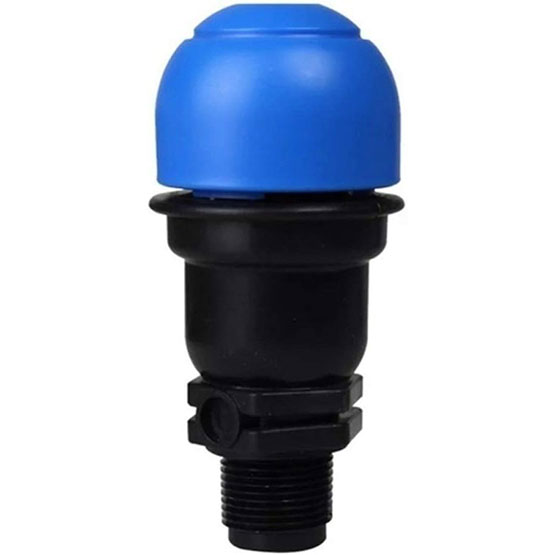 WAQ180 Aquagation Air Intake & Release Combination Valve - K Series - 0.2-16 Bar - 3/4-Inch MPT (150/Cs)
 -
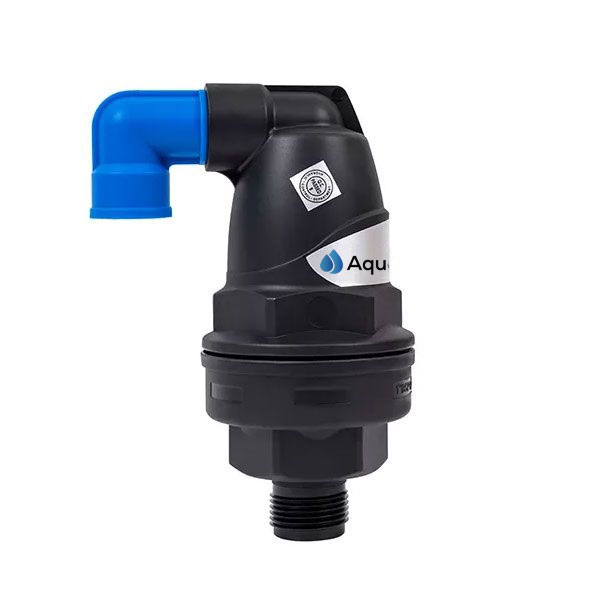 WAQ182 Aquagation Air Intake & Release Combination Valve - K Series - 0.2-16 Bar - 1-Inch MPT (24/Cs)
 -
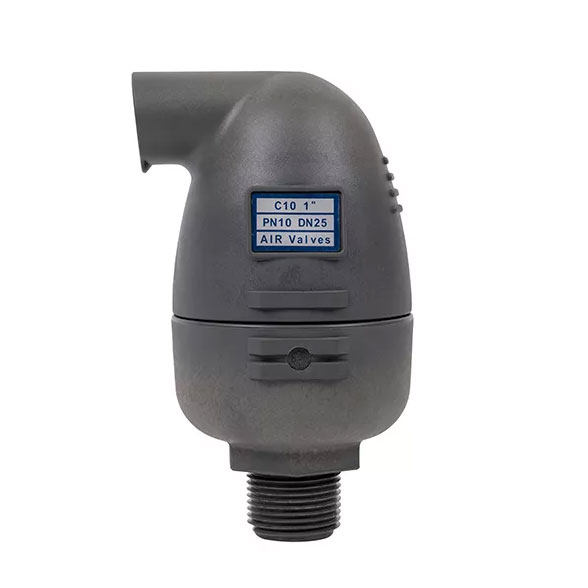 WAQ186 Aquagation Air Intake & Release Combination Valve - C Series - 0.2-16 Bar - 1-Inch MPT (30/Cs)
Details
Air intake and release valves play a crucial role in irrigation systems, especially in commercial agriculture. These valves are designed to control the flow of air within the irrigation system, ensuring efficient and effective water distribution to crops. One of the key functions of air intake valves is to prevent the formation of air pockets or "air locks" within the irrigation system. Air pockets can disrupt the flow of water, leading to uneven distribution and potential damage to crops. By allowing air to enter the system, these valves help maintain a continuous flow of water, eliminating any potential obstructions and ensuring that water reaches every plant evenly.
Furthermore, air release valves are equally important in irrigation systems. They are responsible for releasing accumulated air from the system, preventing the buildup of excess air pressure. This is crucial as high air pressure can lead to bursting or damage to pipes, resulting in costly repairs and significant water loss. By releasing excess air, these valves help maintain the integrity and longevity of the irrigation system.
Effective air intake and release valves also contribute to the overall efficiency of the irrigation system. By ensuring a smooth and uninterrupted flow of water, these valves optimize water usage, reducing wastage and conserving this valuable resource. This is particularly important in commercial agriculture, where large-scale irrigation systems are employed to irrigate vast areas of crops.
By incorporating these valves into your irrigation system, you can ensure efficient and reliable water distribution, leading to healthier crops and increased yields.
Several common problems encoutered when operating an irrigation system are air lock, vacuum, and pressure build-up in the system.
What happens when air gets into an irrigation system?
Air lock primarily occurs when air is sucked in through a pump and becomes trapped in the system, generally at the high point in elevation. For example, if pipe runs up a wall, pierces through the wall, and drops back down into a greenhouse or grow room, air can easily become trapped at the high point where the pipe penetrated the wall.
To ensure air is able to vent from the system it is suggested to add air release valves after pumps, before flow meters, or at the high point of the system. This ensures air can excape and will not disrupt the normal system function.
Where should air relief valves be added?
- Maximum high points where air can rise and become trapped
- Any elevation peak where air could easily become trapped
- After fast closing valves
- Long pipe runs with either rising or falling elevation
- After booster pumps and flow control devices
- Prior to flow meters since air can cause reading errors
Using a relief valve that allows for both air intake and release ensures pressure relief due to accumulation as well as intake during vacuum conditions.
If you need asssistance in determining whether air intake & relief valves are necessary for your system give us a call. We are happy to assist.