Traditional vs. Hydroponic Grow Media

Traditional VS Hydro: Growing Media in the Commercial Horticulture Industry
Regardless of the type of commercial grow operation, a greenhouse or indoor farm must use some form of media to grow in. Any application, whether it is traditional or hydroponic, requires plants to grow in something. Although not every shoe fits for each operation, growers should be aware of which growing media is best suited to the operation in terms of plant needs and goals. Choosing the best option is essential for a productive growing season.
What is Growing Media?
Growing media or commonly referred to as grow medium, comes in a wide variety of types, shapes, and sizes. The ultimate function is to provide a healthy support system for the roots to grow and thrive. The roots are the lifeline of a plant. If they are not supported and strengthened, the plant will do poorly. Roots aid the plant in support, but also water and nutrient absorption. A high quality grow media should support the plant in these endeavors and allow for expansion for the future. Depending on the plant, some growing medias will not work out in terms of plant health, yields, and profits. Research should be completed on each specific plants needs before even getting started with a grow cycle or season.
Common Grow Media Types and Uses
Growing media can be anything a plant can grow in. Now a days, operations use methods of growing media that in the past would have seemed impossible. Traditionally, potting soil or soil was used to grow plants in, as it was seen as the best method. As technology improved and research was conducted, the industry evolved to include other media to be used as a growing media for plants. For high-quality yields, an operation should use one of the top growing mediums- soil, soilless mixes, coco coir, rockwool, perlite, or a custom blend there of.
Soil VS Soilless Mixes
Plants have grown in soil since the beginning of their time on Earth. The use of soil for the cultivation of crops is one of the most traditional of the methods. Although this is a tried and true method, there are some disadvantages that make the use of soil an outdated method of cultivation on large scale operations, although contingent upon the application. As soil can be easily modified to have better properties, it can be a burden on equipment and workers as it can be heavy to move. By using a different medium, an operation can increase efficiency without sacrificing crop quality. Additionally, the question of using packaged soil or straight from the garden soil also comes to mind. Seeing what comes in a lot of these packaged soils, you have to be very careful with the type of pre-packaged soil you select for your grow operation.
In short, pay attention to the labels and ingredients of any and all types of grow media you plan on using in your commercial greenhouse, indoor farm, or in field operation. If you are unsure, you can always have pre packaged soil or soil loads tested for contaminants. The use of soil is mainly for the beginner gardener or operation. Since it acts as a buffer and can shield plants from the over application of nutrients and water, the soil acts as a barrier from the inexperienced application. Soil is known to retain moisture well depending on the soil type, and can allow for less frequent watering. For the commercial operation, the use of soilless media is more ideal and efficient. Soilless mixes contain the same properties as soil, without the soil components of rock and minerals. The use of these mixes has many benefits for the commercial operation.
Not only is it environmentally savvy by saving resources, but it is also reduces water consumption, and applications of fertilizers and nutrients due to a decrease of leaching and run off. These mixes come in a variety of recipes from some of the most common soilless media mixes include perlite, vermiculite, sand, and peat moss.
Perlite:
Perlite is a porous substance that has the abilities to improve drainage, aeration, water retention, and promotes healthy growth and development of a plant. Perlite is an inert substance and is very lightweight. Because of this it is commonly used as a soilless media in hydroponics. It can be easily combined with other media to create a mix with improved drainage, aerability, and water retention.
Vermiculite
Vermiculite is a beneficial soilless media ingredient for plants and the roots. Vermiculite is commonly used in correlation with soils to improve them as an amendment. By adding vermiculite, the soil can be improved in water retention and ability to release water. Vermiculite can also be used in hydroponics and aquaponics, as a soilless media, With the light-weight nature of vermiculite, this media is ideal for larger operations and growing indoors and in greenhouses such as rooftop gardens, tiers, grow houses, and grow rooms.
Sand
Although a growing area of 100 percent sand is not ideal for growing plants, a mixture with some sand in varying amounts has its benefits. Pure sand is not ideal for commercial plant production as it is heavy when wet, easily erodible, and can leach easily from nutrient solutions. Using sand as a soil or soilless media amendment can improve soils’ drainability and can prevent over-watering. In the hydroponics industry, sand is the cheapest solution to grow plants in. With the ease of adding nutrients and the ability to reset easily, makes this an ideal candidate for the hydroponic grower.
Peat Moss
Peat moss is composed of decomposed plant materials harvested from peat bogs. This moss is the slowest to break down due to its acidic nature. Because of the acidity, it must be buffered to make it suitable to grow plants in that are picky about the pH. Peat moss when kept moist is ideal and can improve water retention and provide plants with water when needed easily. However, if left to dry out, the peat moss may develop dry pockets that will need a wetting reagent applied. This media is ideal because growers find it virtually free of weeds, pests,and disease- and it is also naturally sanitary.
Coco Coir
This renewable resource is the result from removing the coconut husks. During processing the resulting debris and dust creates a naturally occurring growing media that is perfect for growing plants and crops. Coco coir can be used independently or as an amendment to the soil. Coco coir has the ability to have high water holding capacity, excellent uniform water distribution, offers great drainage, and has an acceptable pH and EC for plants. Coco coir has the benefit of being a naturally renewable resource touting the eco-friendly label.
Clay Pebbles and Grow Stones
This type of hydroponic grow media consists of small round mineral deposits which offer excellent drainage, aeration, and anti fungal properties when compared to other types of grow media. While often more expensive than other types of grow media, clay pebbles and grow stones offer the added benefit of being able to be reused in some instances.
Stonewool
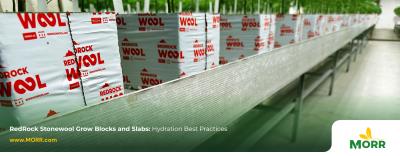
Stonewool is a durable, long-lasting material made from the melting and spinning of rock into blocks and forms. This material is a popular media as it is lightweight, extremely water retentive, durable lasting the whole growing season, and is easily customizable to plant needs and growing area. Even though this material does not break down, it can be easily shaped and cut to meet a plant’s needs.
| Media | Application | Benefits |
| Perlite | Hydroponics, Soil amendment | Increased oxygen, drainage, lightweight, inert |
| Vermiculite | Soil amendment, covering for germination | Increased water retention. lightweight |
| Sand | Soil amendment, hydroponics | Increased drainage, easily reset |
| Peat Moss | Soil amendment, hydroponics | Increased water retention, acidic-perfect for acid loving plants, increase drainage |
| Coco Coir | Hydroponics, soil amendment | Improved drainage, water retention, decreased leaching and erosion |
| Clay Pebbles and Stone | Hydroponics | Improved drainage, increased oxygen flow, reusable |
| Rockwool | Hydroponics | Durable, easily customizable, light weight |
Soil Amendments
When a soil or soilless media is lacking in a property or characteristic, an easy fix is adding amendments to the soil. These amendments can add nutrients, stability, or drainage benefits. Grow media can be improved by adding plant nutrients and plant additives that can emphasize a specific trait or property. Some common organic materials that can be used as amendments are bone meal, blood meal, kelp, guano, mycorrhizae, worm castings, and humus.
Bone Meal
Bone meal is a soil amendment that is created from the grinding up of bones from animals. Bone meal is an excellent source of calcium, phosphorous, and protein for plants. Bone meal is great for plants especially bulb plants as the nutrients are slowly released.
Blood Meal
Blood meal is a soil amendment that is created from the blood of livestock collected after processing. Blood meal is an excellent source of iron and nitrogen for the plants. Not only does it contain high concentrations of these minerals and nutrients, it also aids in composting as an activator.
Kelp
Kelp, although a sea based plant, can be used to amend a soil or soilless media. After harvest, kelp is dried and turned into a powder to be applied to the grow area. Kelp is an excellent source of nitrogen, phosphorous, and potassium. Kelp promotes higher cell division, and growth in plants.
Guano
A natural fertilizer from either bats or seabirds, guano is naturally high in nitrogen, phosphate, and potassium. The application of guano is beneficial to the plants in the grow area. WIth the concentrations of the nutrients of phosphate, potassium, and nitrogen, guano promotes rapid green growth and strong stems, root growth, and flowering.
Mycorrhizae
Mycorrhizae is a naturally occurring fungus that grows in association with the roots of a plant in a symbiotic or mildly pathogenic relationship with the roots. The fungus helps newly transplanted or germinated plants a head start and helps to buffer the stresses of the environment. The use of the mycorrhizae also helps with the reduction of irrigation needs and causes nutrient uptake to improve significantly.
Worm Castings
A soil’s health can be measured by the amount of worms in a space of soil. The more worms, the better the health of the soil and in turn the plants. By using the castings given off from earthworms to amend the soil, plants and other life in the soil benefits. These castings will attract other earthworms to the soil area, as well as improve aeration and enriches the micro-organisms.
Humus
Humus is the organic component of soil, formed by the decomposition of leaves and other plant material by soil microorganisms. This is very beneficial to plants as it is very rich in nutrients, while also improving properties of the soil. This includes porosity, nutrient retention, compaction reduction, water retention, and erosion reduction. All of these benefits aid in the increase of quality yields.
Bulk Grow Media
When selecting the media to use, it is important to weigh the pros and cons specific to the operation. No two operations are the same, meaning what works for one, may not for the other. With such a wide variety to choose from, it can be a challenge to know the best one to pick. Careful attention should be given to plant needs, as well as, overall operation budgets and goals. Once a media is selected, amendments can be added to improve the growing area based on plant needs on a growing basis throughout their life cycles. In the commercial horticulture industry, MORR Inc. is one of the leading suppliers of commercial greenhouse operations for all things nutrient, media, equipment, and more. Knowledgeable staff are there to aid in the selection, installation, and maintenance of all supplies needed in a commercial growing operation. With staff that have worked directly in the industry, a grower can be rest assured that questions and concerns can be met with professionalism and attention to detail to fit the operations specific needs and goals. Click here to shop MORR Inc.'s complete line of commercial-grade grow media
About MORR Inc.-
 Wholesale commercial agriculture distributor for planting, growing, and farming. MORR Inc. supplies top of the line wholesale commercial hydroponic systems, commercial grow systems, LED grow lights, HPS grow lights, nutrient rich soils and growing media, rockwool, a large selection of specialized advanced plant nutrients for different plant life cycles, high tech environmental meters, fans, filters, plant pesticides, plant fungicides, general commercial grow facility supplies and services, and much more!

About
MORR Inc.
MORR Inc. is a wholesale commercial agriculture distributor for planting, growing, and farming located in Los Angeles, CA. MORR Inc. supplies top of the line wholesale commercial hydroponic systems, commercial grow systems, a wide selection of grow lights and automated control systems, nutrient rich soils and growing media, a large selection of specialized advanced plant nutrients for different plant life cycles, dosing and drip irrigation systems, high tech environmental meters and automated systems, fans, filters, plant pesticides, plant fungicides, automated crop management systems, general commercial grow facility supplies and services, plus much more!
Call- 1-310-967-2022