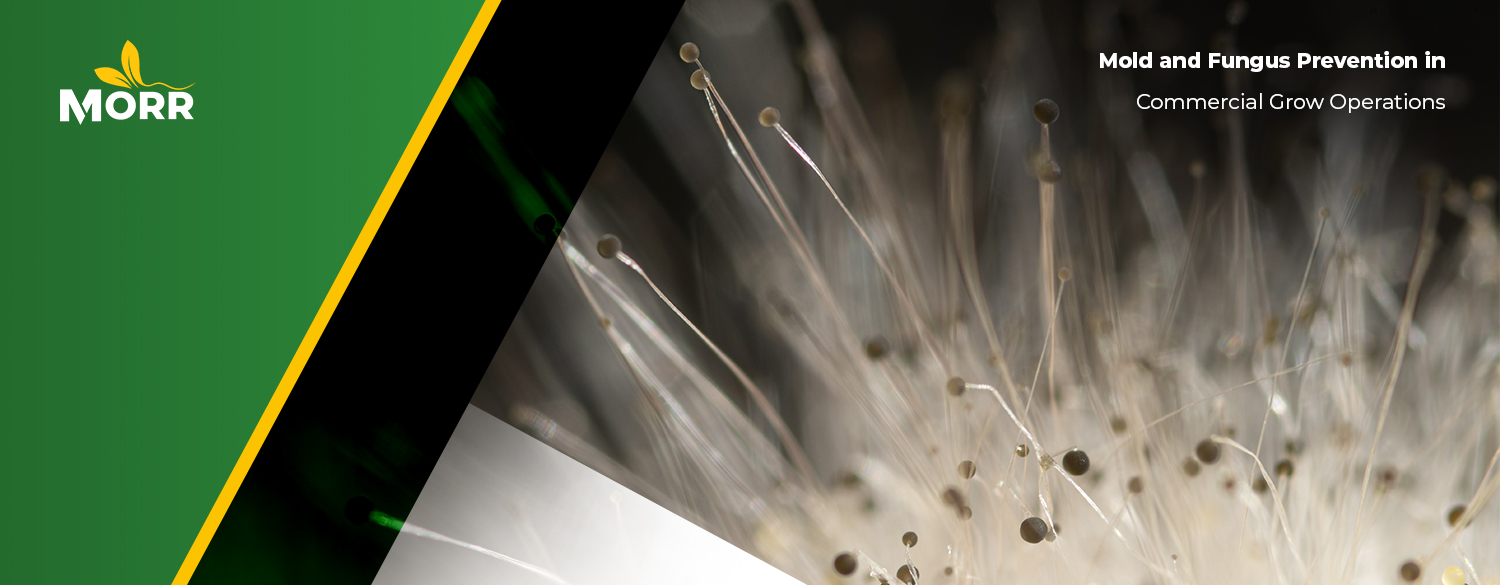
Mold and Fungus Prevention in Commercial Grow Operations
Mold and Fungi Growth Control in Commercial Greenhouses
A top concern in a commercial greenhouse is the presence of mold and fungi. Every greenhouse will at some point have some form of mold and fungi growth. More times than not, mold and fungi growth can happen very quickly, and in some cases, overnight. However, a grower can be more informed and pick up on the warning signs of a potential mold or fungus outbreak in the growing area before it pops up. By being aware of the growing requirements for mold and fungi, how to control the growth, and how to prevent the outbreak of these vectors is the best practice in the overall control and elimination of mold and fungus in a commercial greenhouse.
Mold and Fungus Growth Conditions
In order for mold or fungus to grow, there needs to be specific environmental conditions present. Removing one or more of these conditions will ensure a reduction or elimination of mold and fungus growth in the greenhouse. As greenhouses are very warm and moist environments by nature, these conditions are conducive for spore growth, in addition to standing water areas, poor air circulation, and a high relative humidity over 85 percent. This "perfect" combination of warm temperatures, minimal air flow, and moist surfaces creates a prime growing environment for both mold and fungi to flourish.
Preventing Mold and Fungi Growth in a Greenhouse
As stated above, greenhouse mold and mildew have specific growing conditions needed to grow quickly. Most fungi reproduce asexually through spores with which they then spread through the air until they hit a solid surface to grow. Spores will emerge from a bud or fruiting body and when released, will travel and spread all throughout a greenhouse via moisture and air. It should be noted that fungi spores will harbor on surfaces for extended periods of time even if the environmental conditions are not present for actual growth. The spores, like the seeds of a plant, will wait until the conditions are conducive for growth.
The United States Centers for Disease Control and Prevention (CDC) have conducted multiple studies on fungi and molds. In these studies, it could not be determined the exact number of species, however, the estimated number range is in the tens of thousands to over three hundred thousand different species of fungi and molds! Overall, no matter the species, the one thing that is common across the board is the environmental conditions the species needs to grow. By understanding these conditions, a grower can help prevent the growth and spread of these spores. The number one method of fungus and mold growth is prevention.
Prevention of Mold and Fungi Growth
A grower should remember that prevention is key in the control of spores in the greenhouse. By addressing the specific environmental conditions needed for their growth, a grower can have the best control over any potential infestation of mold and fungi. Once again, these prime conditions are standing water, humidity control, warm temperatures, poor air circulation, and dark areas with insufficient lighting.
Reducing Standing Water
Standing water in a greenhouse is not only a vector to plant disease, but also a welcome mat to algae and also a "slip and fall" safety hazard for workers. Reducing the instances of standing water on plant surfaces, tables, and floors will help keep the greenhouse safe and mold free. The ways that a grower can reduce standing water is through timed and purposeful watering, having good drainage systems, and production of steady air flow throughout a greenhouse via vents and fans.
Reducing Humidity
Humidity in warmer months can help in the reduction of watering plants, as well as, help in reducing stress on plants in regards to watering practices in general. However, too much humidity is an issue, inviting mold and fungal growth. When the humidity in a greenhouse reaches 85 or higher, it creates a prime breeding ground for spore growth. Ways that a grower can better control humidity in a greenhouse is through proper plant spacing, have well drained floors and grow media, warming beds, air circulation, and venting of moisture through measured controls and automation.
Warm Temperatures
One benefit of greenhouses is the ability to keep the growing environment warm and bright for plants. A greenhouse can turn deadly for plants and encourage spore growth if it is too hot and humid. A grower should have a system in place to control the temperature of a greenhouse through manual or automated means. The best approach is through an automated grow environment monitoring system that tracks the temperature and reacts to either too low or too high of temperatures. By having a venting and air circulation system in place, the temperatures can be kept in check without risking plant health.
Improving Air Circulation
One of the biggest vectors of fungal growth and molds, as well as some pests, is poor air circulation. A grower needs to be aware of the design of their growing area and have fans and vents installed in proper spacings and power levels. As a reminder, every greenhouse is different and ventilation design should be one of the main starting points before a new build out or greenhouse upgrade. A good greenhouse ventilation system starts with a sidewall ventilation system that draws in fresh air, and has upper vents to release hot air through the top of the greenhouse. A grower needs to calculate their overall floor area to determine the size and scope of the ventilation system. The system should have around 20 percent of the floor area. Spacings of fans and vents are determined by the size of the greenhouse in addition to the power of the fans being used. A grower needs to reference the manufacturer recommendations and compare them to the sizing of their growing area. Proper ventilation and fan spacing is key in improving air circulation and preventing fungi, mold, or algae.
Best Housekeeping Practices for Mold and Fungus Control
In addition to controlling the grow environment, a grower should also follow good housekeeping practices. These practices include the removal of plant waste and old plant materials, using new or fully sanitized plant containers for new seasons, and completely cleaning and sanitizing growing areas in between growing seasons. Using cleaners that remove fungus and bacteria are key in resetting a growing area to reduce mold growth and transmission.
Remember, mold and fungus growth is dependent on the environment, as well as the reaction to spores growing. By controlling the environment, knowing the causes, as well as what to do in the event of a spore outbreak, will ensure that the problem is dealt with swiftly and with minimal damage to crops.
For more information on how to best prevent and control mold and fungal growth in a greenhouse or CEA facility, be sure to reach out to one of Morr’s expert staff who are backed by years of industry experience while making product recommendations based on individual needs.
Click here for more information about Morr's extensive line up of both chemical and organic solutions for the prevention and treatment of mold, fungus, bacteria, and plant/crop diseases

About
MORR Inc.
MORR Inc. is a wholesale commercial agriculture distributor for planting, growing, and farming located in Los Angeles, CA. MORR Inc. supplies top of the line wholesale commercial hydroponic systems, commercial grow systems, a wide selection of grow lights and automated control systems, nutrient rich soils and growing media, a large selection of specialized advanced plant nutrients for different plant life cycles, dosing and drip irrigation systems, high tech environmental meters and automated systems, fans, filters, plant pesticides, plant fungicides, automated crop management systems, general commercial grow facility supplies and services, plus much more!
Call- 1-310-967-2022