Los Angeles Hydroponic Supplies Wholesale

Los Angeles Wholesale Hydroponic Supplies for the Commercial Operation
Whether your commercial growing operation is starting from the ground up or updating existing needs of materials and equipment, it is important to go with a trusted source of high quality materials. MORR Inc. is a southern California based wholesale greenhouse, CEA, and hydroponic supply company. MORR Inc. staff are experts in their field and have decades of combined experience working in industry. With this knowledge and quality equipment and supplies, a commercial grower can not be steered wrong. Hydroponic growing requires many supplies and on a large scale, those supplies need to be quality materials. What is put into the growing season will be rewarded in the end during harvest.
Most Common Hydroponic Systems for the Commercial Operation
In the selection of a hydroponic system, considerations need to be made based on the crops being grown, goals, budget, and overall design of the growing area. Each system type differs in the design, crop growing capabilities, and overall costs both in initial startup and over the course of a growing season. There are six main types of hydroponic systems, however, a grower can customize and combine systems to meet their needs. The six main types are wicking, nutrient film technique (NFT), deep water culture (DWC), ebb and flow, aeroponics, and drip systems. Below is a concise chart for information on these types of hydroponic systems.
|
System Type |
Definition |
Crops |
|
Wicking |
The simplest form of hydroponics that is passive with no equipment or motors with the exception of a pump- system uses gravity to feed the system. |
Fast growing crops: lettuce and herbs |
|
Nutrient Film Technique (NFT) |
System with the use of a tray placed at a slight angle with plants and a reservoir tank at the bottom or under the ray. System uses pumps and motors to feed water through the system. |
Fast growing or shallow rooted crops such as lettuce and herbs |
|
Deep Water Culture (DWC) |
A hydroponic method of plant production by means of suspending the plant roots in a solution of nutrient-rich, oxygenated water with deep tanks and containers. |
Shallow or deep rooted plants: tomatoes, cucumbers, hemp, ect |
|
Ebb and Flow |
A simple system that utilizes gravity to refill reservoirs and a pump to allow water to go up to the growing trays above in a cycle of ebb and flow through a timer system |
Depends on tray size; large crops such as tomatoes and cucumbers can be grown, or smaller crops like lettuce or herbs |
|
Aeroponics |
A system that utilizes sprayers in an air tight growing tray to spray roots suspended in air with water and nutrient solution |
Medium to large crops: tomatoes and other vine crops Small crops like lettuce and herbs |
|
Drip Systems |
Known as a trickle or micro irrigation system, tis uses a pump and small nozzles to apply water in small increments throughout the day allowing for precise water control |
Leeks, lettuce, onions, melons, peas, strawberries, squash |
** considerations for initial start up should be taken depending on the size, scale, and overall design of the operation. **
Supplies for the Hydroponic System
Depending on the type of system, a grower will need to stock up for each growing season before the start to ensure a smooth sail. However, supplies may need to be stocked throughout the growing season as well as nutrients and fertilizers. Research should be conducted specific to the hydroponic system, but there are basic supplies needed by most every hydroponic operation.
Equipment
Regardless of the system, there are several supplies that need to be in stock for the operation or before the system can even be run for the growing season. These materials include pumps, timers, trays, media, lighting and more. Pumps can come in a variety of sizes and shapes. Depending on the type of system, it may require just the basic water pump or a watertight submersible pump. For systems that require watering or flushing at specific times throughout the day, a timer will need to be installed into the system. Timers can be manual timers or those that are digital. Trays are enclosed plastic that can house plants through specific spacing specific to plant needs.
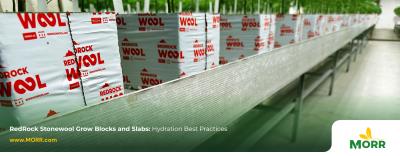
These trays house the plants and allow for nutrient solution to run through the root systems of plants. Media is not the potting soil seen in traditional applications, instead it is a soil-less media such as stonewool, clay, coco coir, or stone. Having these on hand are essential to starting plants with research needed for the system and plant needs.
Lighting is dependent on the goals and overall budget of the operation. The most common lighting used in industry now a days is the newer LED grow lighting systems. These lights can be broad spectrum having all light colors or be specific to growing stages of plants. Although this listing of equipment is not all inclusive, an operator should reach out and research specific needs of the operation before the start of a growing season.
Plant Nutrient Solutions
In a hydroponic system, it is important to use water soluble nutrients or fertilizers to avoid clogs and problems down the line in the irrigation system. Plants regardless of the type of system need to be supplied with nutrients to grow big and strong. These plant nutrients can be purchased as pre-mixed solutions mixed specifically to meet plant needs or be purchased separately and mixed by the grower. The top nutrients needed by a plant are nitrogen, potassium, and phosphorus. There are other nutrients that may be needed throughout the season.
Miscellaneous Supplies
Other materials that may be needed in the hydroponic system include monitors, testing equipment such as pH readers, heaters, and pest control materials. Monitoring is essential to the successful operation of a hydroponic system. Monitoring of water levels, nutrient solutions, pH, EC, and more will allow a grower to be in the know for plant needs before it becomes a major issue to quality. Monitors and testing equipment can come in a variety of tech levels from simple to complex. From hand monitoring plants to inclusive systems that monitor all levels from a single system to the levels of even turning on systems to address issues found.
The selection of which type a grower needs is dependent on the needs and budget of the operation. Heaters or cooling systems will need to be in place to actively control the temperature and humidity of a growing area. A greenhouse can quickly become an oven without proper air flow, or can become too cold in winter months without proper heating. All operations should have an Integrated Pest Management plant or IPM plan in place to prevent pests and disease in the greenhouse. A grower should have in their storage materials to address issues as they arise. These include pesticides, herbicides, and fungicides.
|
Sample Shopping List |
|
Although the above list is not all inclusive of all operations and hydroponic system types, it is important to at least have the above items on the basic level. If a grower is unsure of their overall needs for the operation or needs suggestions for better control, MORR Inc. staff and services are available for use by even the most seasoned of operators. With services in planning, installation, maintenance, waste management, and more. https://www.morr.com/services

About
MORR Inc.
MORR Inc. is a wholesale commercial agriculture distributor for planting, growing, and farming located in Los Angeles, CA. MORR Inc. supplies top of the line wholesale commercial hydroponic systems, commercial grow systems, a wide selection of grow lights and automated control systems, nutrient rich soils and growing media, a large selection of specialized advanced plant nutrients for different plant life cycles, dosing and drip irrigation systems, high tech environmental meters and automated systems, fans, filters, plant pesticides, plant fungicides, automated crop management systems, general commercial grow facility supplies and services, plus much more!
Call- 1-310-967-2022