Landscape Drip Irrigation Systems

Drip Line Installations for Landscape Design
 In a landscape, there are several types and solutions for irrigation. When one thinks of landscaping, many think of just the hardscape (stonework) and the living scape (plants). After the installation, the care and maintenance of the landscape is left to the owner. Wise design choices need to be made to give plants and aesthetics the best chance of survival and longevity. The most common irrigation methods in landscape are flood systems, rotary sprinklers, spray irrigation, and drip irrigation. Each of these irrigation types have their benefits and appropriate application areas. When looking at the four types, drip irrigation has the best eco-friendly approach, as well as the ability to stay hidden in a design, and still offer the appropriate water amounts for plant needs.
What is drip irrigation?
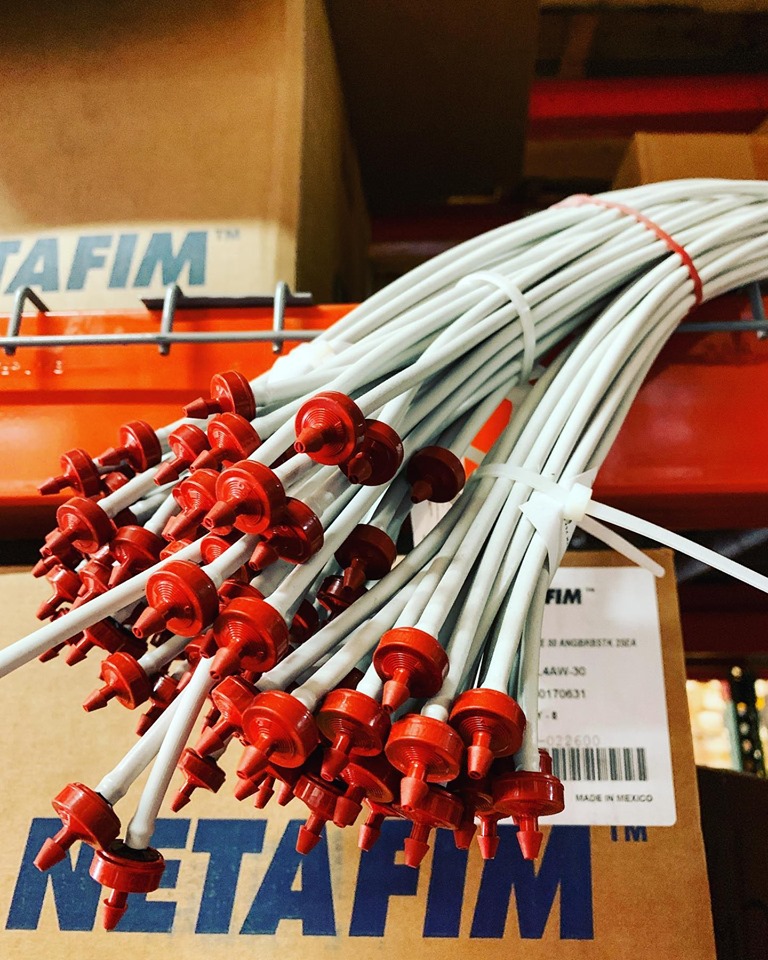 Drip irrigation is known as a micro-irrigation system due to the system applying small amounts of water and nutrients over a period of time. These lines have the ability to conserve water and apply directly to the root zone preventing erosion, runoff, and evaporation.
A drip irrigation uses a network of piping, valves, tubing, and emitters. A drip irrigation system can be more efficient than other types of irrigation systems such as sprinklers and flood systems.
Why is drip irrigation the best solution for water conscious individuals?
 Among the many benefits of drip irrigation, water conservation ranks at the top saving on a vital resource and pockets for operators. With more drought conditions and water restrictions placed on operators and homeowners alike, drip irrigation is the go to solution to combat the rising need for less water and better quality of landscape. These setups are beneficial for use in both a residential and commercial setting where in these locations drip lines can be installed in condos, corporate campuses, medians, and more. The drip emitter applies precise amounts of water is distributed preventing the loss of water through evaporation. Additionally, water conditions will not alter the application like sprayer techniques. Instead of all at once in large quantities, drip irrigation systems apply water slowly and directly to the root zone with 90-95 percent efficient in comparison to 30-60 percent efficiency in sprayers and rotors.
Installation of Drip Lines in Landscapes
The installation of drip lines in a landscape is one that can be completed quickly and efficiently. When compared to other installation types, materials are inexpensive and easy to install. Before installing a drip irrigation line into a landscape, it is important to do research and sketch to make plans and estimates for the desired area.
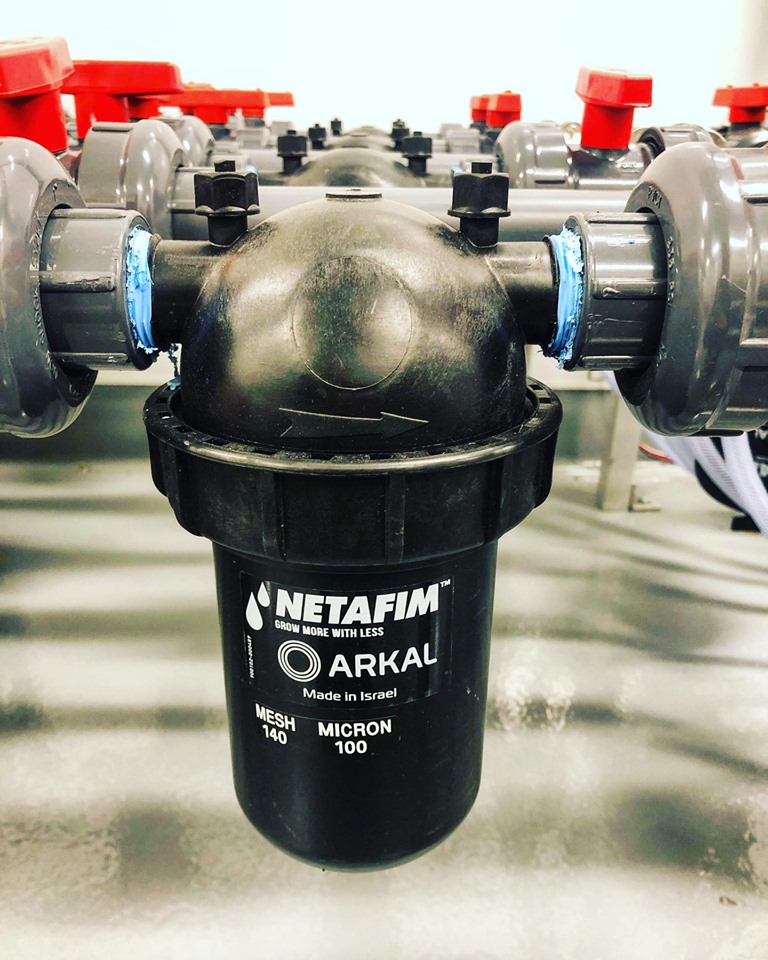
Start by measuring the garden, beds, or lawn. Consideration needs to be done on the pressures, flow rate, and overall plant needs. There are several parts of a drip irrigation system. A timer to turn the water on and off, a backflow preventer that prevents the backflow of dirty water, screen filter to trap particles that could potentially clog a system, pressure regulator to lower the incoming water pressure to a level and manageable 25-30 psi, hose adapter connector, a main line, fittings for any curves, hose end clamps, tubing stakes and adjustable sprayer, and assorted emitters. A system is not a cookie cutter one, and may need more or less materials to install.
Example Drip Line Installation
Below is a list of materials suggested for an in ground installation of a drip line. Layout
- A Sandstorm 3x24” sand media filter is located after the well head.
- This will run up to 288gpm. It is modular and can be easily expanded if required at a later stage.
- A 6” mainline (max 400gpm) connects the well pump to the filter and downstream to the Fertikit.
- A Fertikit 3G is located downstream of the filter along with nutrient stock tanks.
- I have shown this conceptually on the overall layout plan.
- I suggest using a Tuff Shed or similar to protect the major equipment.
- Refer to Fertikit sales manual and detail sheet for minor equipment list such as water meter, pressure regulating and sustaining valves etc.
- Note that the Fertikit model used would be an “SP” configuration.
- Each 1ac plot is controlled by a single zone valve.
- Each zone is center fed by 4” Flexnet manifold pipe.
- Use Flexnet Tee start connectors to attach thinwall dripline.
- Use Dripnet PC Pressure compensating drip line at 30” row spacing and 12” emitter spacing.
- Dripnet PC 636 13mil, 0.42gph, 12” O.C.
- Use Flexnet as a flush manifold at each end of the zone to allow complete maintenance flushing of the system.
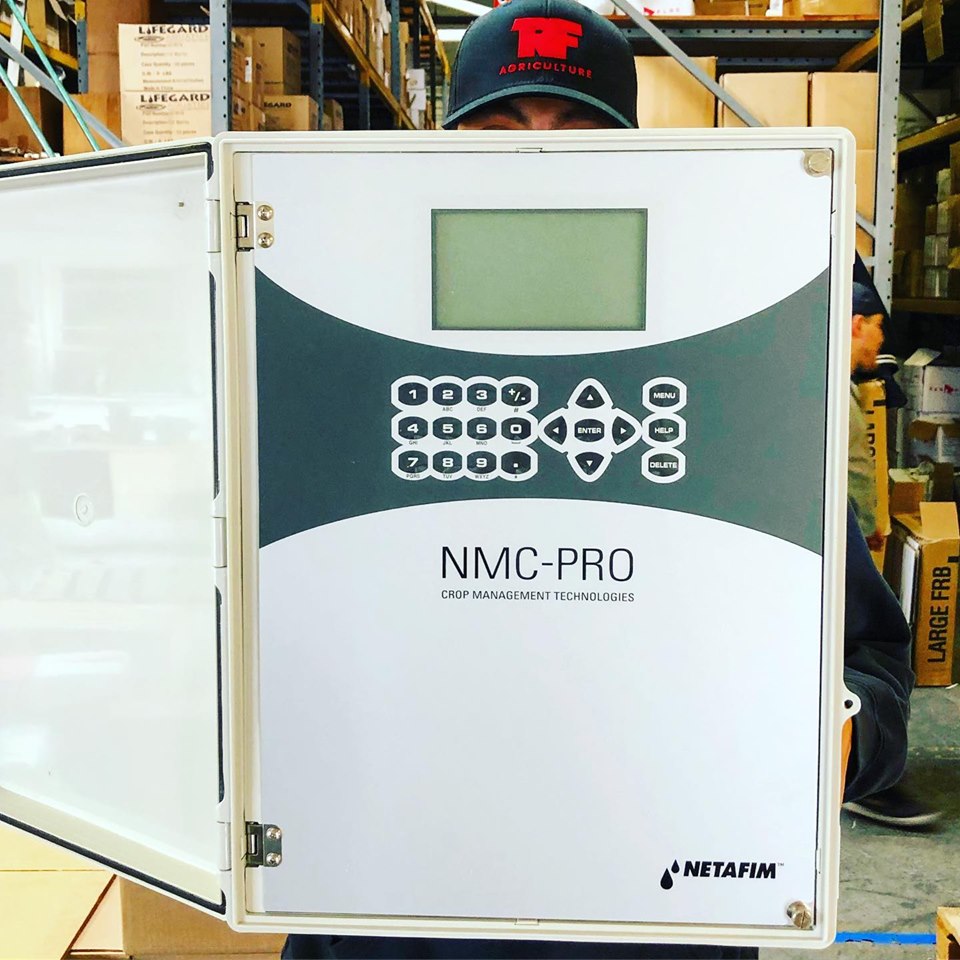 “The whole system - (Fertikit, Sandstorm Filter, Valves etc) would be controlled by the NMC controller on the Fertikit 3G.
This also comes with an NMC-Air Kit, so if you install an ethernet drop at the controller you can access the system for alarms, make programming changes etc, remotely. The system would run at 122.5gpm per zone, so you could run each zone separately or simultaneously. Note; to apply 2.5gal per plant would take 6 hours, although I would estimate that max demand should be 0.5gal per plant per day which would take 1 hr, 12 minutes.”
After the design has been approved by the client, a full comprehensive materials list will be drafted very quickly to get the ball rolling for the needed system regardless of whether the application is for commercial, agricultural, or residential.
Give MORR Inc. a call today to find out more information about Netafim drip irrigation systems for landscaping applications- 1-310-967-2022 Need a next generation drip irrigation system installed? Please visit- https://www.morr.com/services
MORR Inc.
 For more information and consultations for drip irrigation applications, be sure to reach out to an expert staff member at MORR Inc.. MORR Inc. is a wholesale commercial agriculture distributor for planting, growing, and farming located in Los Angeles, CA. MORR Inc. supplies top of the line wholesale commercial hydroponic systems, commercial grow systems, a wide selection of grow lights and automated control systems, nutrient rich soils and growing media, a large selection of specialized advanced plant nutrients for different plant life cycles, dosing and drip irrigation systems, high tech environmental meters and automated systems, fans, filters, plant pesticides, plant fungicides, general commercial grow facility supplies and services, plus much more! Call- 1-310-967-2022

About
MORR Inc.
MORR Inc. is a wholesale commercial agriculture distributor for planting, growing, and farming located in Los Angeles, CA. MORR Inc. supplies top of the line wholesale commercial hydroponic systems, commercial grow systems, a wide selection of grow lights and automated control systems, nutrient rich soils and growing media, a large selection of specialized advanced plant nutrients for different plant life cycles, dosing and drip irrigation systems, high tech environmental meters and automated systems, fans, filters, plant pesticides, plant fungicides, automated crop management systems, general commercial grow facility supplies and services, plus much more!
Call- 1-310-967-2022