Integrated Pest Management for Aphid Control
Aphid Control Through IPM and Morr
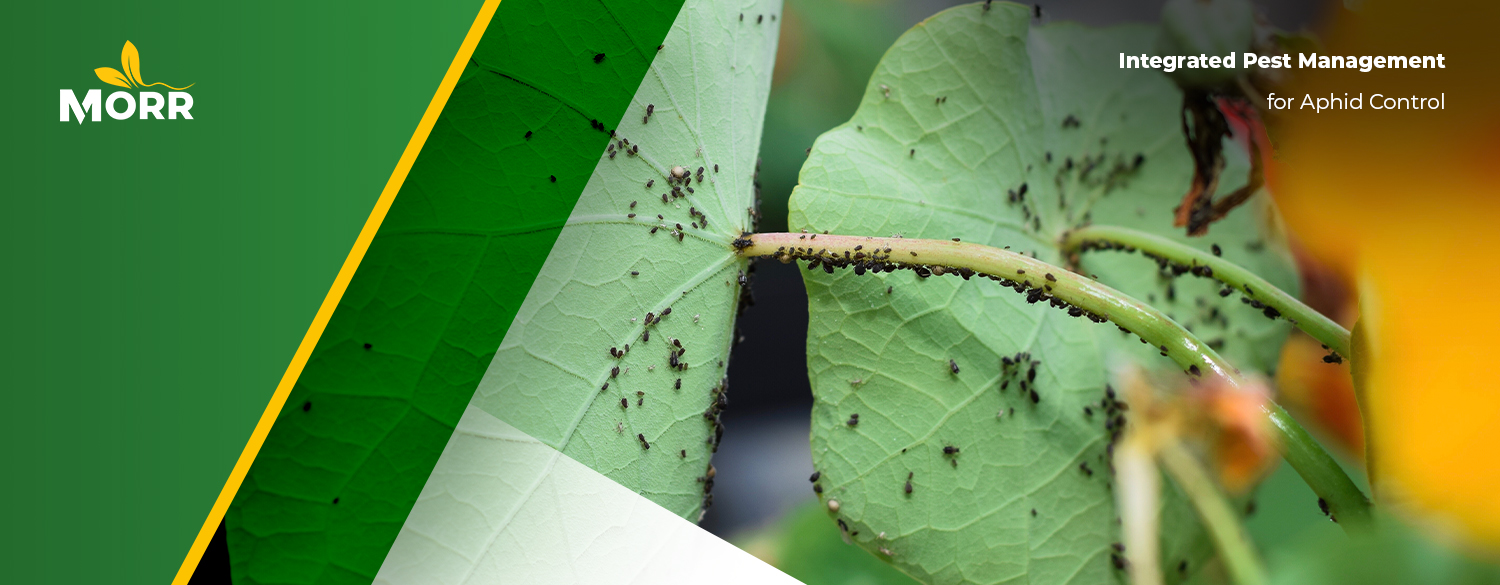
Aphids may be tiny, but they are killers in a greenhouse zapping the life out of crops. These seemingly silent killers are some of the top most unwanted pests in a greenhouse. However, the good news is that control of these tiny green pests can be a breeze as long as a good integrated pest management plan is in place.
Although aphids are very small, the problem is their power in numbers. Aphids can grow unchecked in a greenhouse and these soft-bodied, sap-sucking insects can spread disease and viruses between plants in a greenhouse. This transmission can happen within seconds of an infestation which causes damage to both individual plants being preyed on and the entire growing area. There are many viruses that can be spread between plants thanks to aphids which will impact all parts of a plant from the stems, roots, leaves, and flowers. Not only do aphids affect the quality of plants, but they will also secrete a sticky material known as honeydew that introduces plants to mold and attracts other insects like ants to the growing area.
WIth these risks, it should come as no surprise that the control of these green pests is of the utmost importance for the health and well being of plants, as well as an operation’s plant quality reputation. Depending on the type of operation, one may need to follow specific steps in order to control pests through organic means, or if there are no limitations on growing environments- chemical applications.
Control Methods for Proper Aphid Control
The best step to controlling aphids is all in the prevention and having a great plan in place for proper pest management through an IPM plan. By knowing the habits and mannerisms of aphids, a grower can be better prepared to notice a pest issue before it blooms into a full blown infestation. Aphids love to hide and be under leaves and plant materials. By carefully monitoring the plant material and leaves, especially the undersides of the leaves, a grower can become aware of sneaky aphids very quickly.
Sanitation and Cleanliness
Having proper housekeeping in place in a greenhouse is essential to the control of not only pests, but also viruses and diseases. Every growing operation needs to make sure to do a hard reset in a growing area after each season. This includes removing all pots, growing containers, old media, debris, cleaning the tables, benches, and other equipment, and then sanitizing the surfaces. This makes sure that diseases and pests do not linger from season to season. During the growing season, housekeeping should not lessen in quality. All dead plant material needs to be removed, sickly plants removed and inspected for disease and pests, cleaning equipment between uses, and more. Workers should also be taught proper cleanliness techniques, and depending on the type of operation, they may need to be trained on extra techniques.
Reaction to An Aphid Attack
Prevention is key to a successful operation, however, even the best operator will have pests infiltrate their growing areas. The way a grower responds to these attacks is key to how it will affect the growing season. There are many stages to a pest attack on a growing operation. The first stage is when the pests enter the growing area. The second stage is where the pests make a home in the growing areas and start to reproduce. The final stage is a full blown infestation. The first and second stage have lower plant effects, and the third final stage is where quality and growing conditions decline.
Chemical Control of Aphids
Chemical control of aphids comes in the form of pesticides. A grower can apply a broad spectrum pesticide or one that targets soft-bodied insects like aphids. The best insecticides are those that are insecticidal soaps or oils. Oil based products can include petroleum-based oils or plant based ones. These act as a smothering agent to the aphid and must be applied to the infested foliage. It is important to follow manufacturer directions for the proper application of these materials.
Soaps, neem oil, and horticultural oils kill only the aphids that are present on the day that they are applied, so repeated applications may be necessary to address an infestation. It should be noted that these can harm beneficial insects as well, so application should be done only when needed.
Organic/ Natural Pesticides
The typical go to for a grower may be chemicals in the form of pesticides, however, there is a push for lower environmental footprints. These can come in the form of homemade solutions with vinegar, or soaps. Other organic means that are better for the environment and avoid harm to beneficial organisms. In fact, some growers will apply beneficial insects such as ladybugs. These are beneficial to the environment and also do not stay on the plant post harvest.
The choice of whether chemical or organic means is right for an operation is all based on the individual. Budget, goals, and grower facility will determine the measures best suited.
For more information about the control of aphids and how they may impact your operation, as well as tools and practices best suited for you, be sure to reach out to a knowledgeable staff member at Morr. Call: 1-310-967-2022
Looking for AG pesticides? Click here to shop MORR's extensive selection of traditional, biological, and organic pesticides, insecticides, miticides, fungicides, beneficial insects, application systems, supplies, and more!

About
MORR Inc.
MORR Inc. is a wholesale commercial agriculture distributor for planting, growing, and farming located in Los Angeles, CA. MORR Inc. supplies top of the line wholesale commercial hydroponic systems, commercial grow systems, a wide selection of grow lights and automated control systems, nutrient rich soils and growing media, a large selection of specialized advanced plant nutrients for different plant life cycles, dosing and drip irrigation systems, high tech environmental meters and automated systems, fans, filters, plant pesticides, plant fungicides, automated crop management systems, general commercial grow facility supplies and services, plus much more!
Call- 1-310-967-2022