Crop Protection Systems and Sanitation Systems

Cleanliness and Sanitation in a Commercial Greenhouse
There are several aspects of running a successful greenhouse operation that should be considered to make the growing season run as smooth as possible. One such aspect is cleaning and sanitation. A greenhouse’s main benefit is to have an enclosed, fully controlled environment to grow crops otherwise not suited to the area, or extending the growing seasons to year round. However, this enclosed space can cause issues with pathogens, disease, and pests. A way to combat and prevent the spread of disease and pests is through active prevention and planning with sanitation and cleaning. 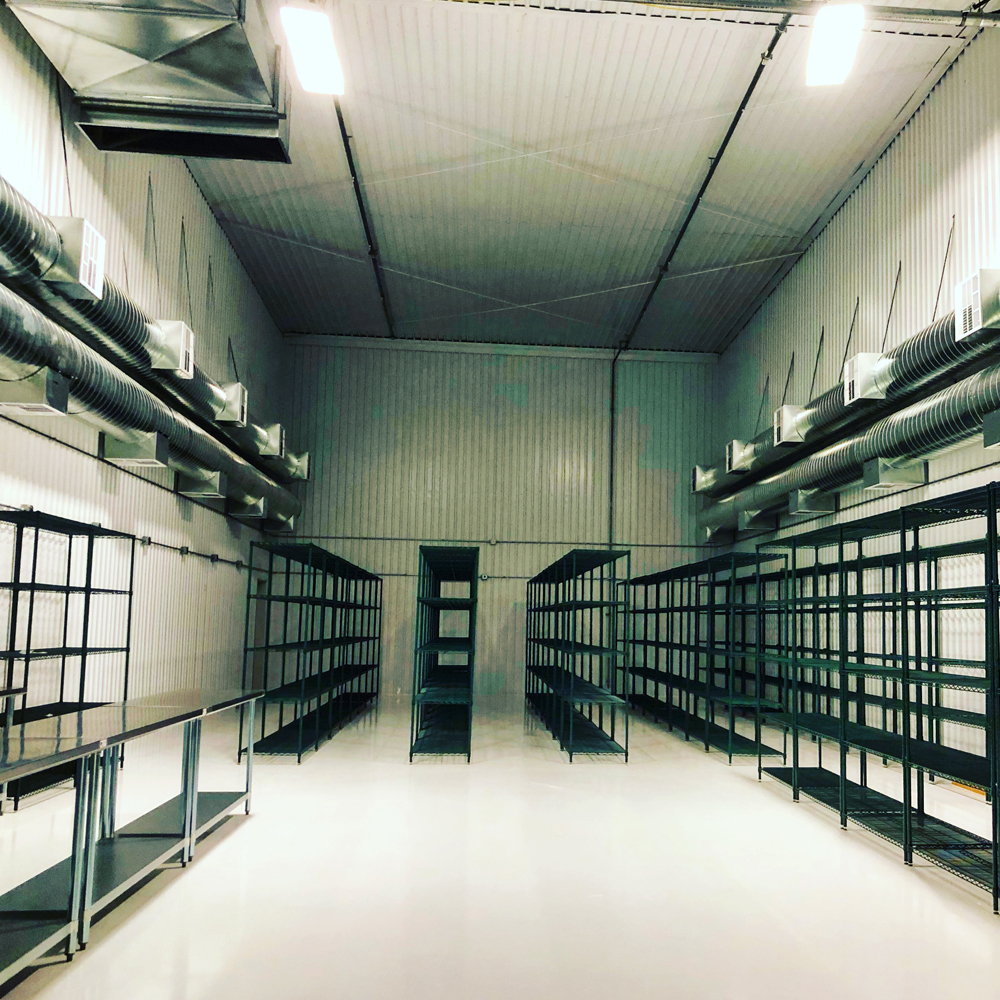
What’s the Difference?
Although the terms cleaning and sanitation are commonly used interchangeably in conversation, these are different terms and activities. Cleaning removes the debris and dirt from surfaces, but not the microscopic organisms that can cause the spread of disease. Sanitation is the removal of bacteria and other microorganisms off of a surface. Cleaning and sanitizing should be done together to effectively keep disease and pathogens at bay. Common cleaning practices are sweeping, clipping dead or wilting leaves, removal of excess soil under benches, removal of dust, changing filters, ect. Sanitation practices include the use of disinfectant such as bleach applied to the surface for a period of time and then wiped clean.
Why Clean and Sanitize?
It is good housekeeping practice to clean and sanitize not only to improve organization and employee safety, but also for the benefit of the plants. In the commercial greenhouse there are many top most unwanted pathogens that can wreak havoc on plants and overall quality and yields of the crops being grown. with these pathogens it is important to have a good cleaning and sanitation practice in your commercial Greenhouse so that these can be controlled or altogether eliminated from becoming an issue within the growing area. Powdery mildew, downy mildew, botrytis, fusarium, algae, moss, and liverwort are some of the pathogens that can wreak havoc on a crop.
The Proper Way to Have a Squeaky Clean Greenhouse
 It's beneficial to set up a sanitation plan that can be followed between crops while they're being grown and at the end of the season in between. similar to an integrated Pest Management plan, a sanitation plan can be a written program that is instrumental by pointing out the steps to follow, the process and the listing of Set a required. A person should be designated we're having a tire crew to clean up a maturing crops that can help extend the life more thorough, end-of-season cheating and sanitation practices. It overall depends on your operation and crop rotation schedule for how you choose to sanitize between crops. And have for accountability for following through with these practices. This can be implemented in thorough safety trainings that should be done start of the season and throughout. Within the cleaning and sanitation process there is a disease triangle that when all three sides are together what disease will happen. And this triangle there is environment with such elements as temperature and humidity, pathogens relating to type source and spread, and host relating to type and density.
If all three sides of this triangle are present, then a disease will occur within the growing area. The goal of eliminating disease within a grow area is to eliminate one or more of the sides of the triangle. by doing so this eliminates the perfect environment for disease or pests to flourish. Cleaning is a recommended practice that really gives better control more so than sanitizing alone because it goes a long way towards increasing the sanitizer efficiency. Cleaning eliminates organic matter which plays a huge role to host a variety of pathogens and insects. After dirt, dust, dead plant material, and other large organic matter is removed from the area through general cleaning, sanitation have you brought it.
Sanitizing agents that are chosen will have to have the highest possible efficiency this may seem really extremely costly, but skipping sanitation is a crucial step in eliminating the possibility the outbreak will spread again. Some will hide and not reappear until the next growing season even if it looks like it has gotten under control, microscopic organisms are waiting to prey on the unsuspecting new growth in the greenhouse. This also reduces the risk of an on-the-job injury by eliminating the slippery algae growth that can lead to slipping or falling throughout the greenhouse.  Although this may take time and money in the end, these practices will pay for itself in many ways such as decreasing disease pressure and lead to higher crop quality and greater yields. Additionally being able to identify crucial parts of control within your sanitation program will Benicar show and making sure that disease and pests do not she can hear Greenhouse unexpectedly. Some major areas of control that are crucial range from growing areas which include non-crop areas, edges, and under benches and access points to the greenhouse or Nursery fields, high traffic areas, and ventilation ducts.
Starting Off on the Right Root: Selecting the Right Tools for the Job
With sanitation and cleaning such high importance in a commercial greenhouse, it is important to select tools, equipment, and products that can effectively clean and sanitize your growing area of pathogens and pests. when selecting the appropriate products for your commercial greenhouse, is important to go with trusted companies that has industry backing and proven results.  Biosafe products are a common company using all aspects of commercial horticulture especially for cleaning and sanitation. Biosafe products are eco-friendly with sustainability used as a pillar and their goals in the week. Biosafe products truly meet all requirements in NOP and are OMRI listed by using patented peroxide formulas, botanical extracts, and naturally occurring fatty acids.
  MORR Inc. has partnered with Biosafe products and offers a wide range of these eco-friendly sustainable products for use by the commercial operation. Some of Biosafe’s popular products, Biosafe green clean alkaline cleaner and Biosafe green clean line and surface cleaner - sulfuric acid are some of the top products that can be used in any operation. The green clean alkaline cleaner can be applied to any surface for cleaning and sanitation that can be visibly seen. The line and surface cleaner can be run through irrigation lines to control the growth of bacteria and algae was in the line systems that cannot be readily seen.
For any recommendations and assistance with any product, application, or any other services offered through RF agriculture be sure to get in contact with the excellent staff and experts that are backed with decades of knowledge. 
About MORR Inc.-
Wholesale commercial agriculture distributor for planting, growing, and farming. RFAgriculture supplies top of the line wholesale commercial hydroponic systems, commercial grow systems, LED grow lights, HPS grow lights, nutrient rich soils and growing media, rockwool, a large selection of specialized advanced plant nutrients for different plant life cycles, high tech environmental meters, fans, filters, plant pesticides, plant fungicides, general commercial grow facility supplies and services, and much more! https://MORR.com

About
MORR Inc.
MORR Inc. is a wholesale commercial agriculture distributor for planting, growing, and farming located in Los Angeles, CA. MORR Inc. supplies top of the line wholesale commercial hydroponic systems, commercial grow systems, a wide selection of grow lights and automated control systems, nutrient rich soils and growing media, a large selection of specialized advanced plant nutrients for different plant life cycles, dosing and drip irrigation systems, high tech environmental meters and automated systems, fans, filters, plant pesticides, plant fungicides, automated crop management systems, general commercial grow facility supplies and services, plus much more!
Call- 1-310-967-2022