Commercial Greenhouse Ventilation and Environmental Control Systems

Commercial Greenhouse Operations- ventilation, fans, cooling systems, HVAC, automated environmental control systems, CO2 meters, thermostats, dehumidifiers, and more...
To run a successful wholesale greenhouse, no matter the crop, a grower must implement the necessary features and equipment including irrigation, temperature control, and adequate ventilation in order to operate. Utilizing the correct “dialed in” equipment in a commercial greenhouse can be tricky, but its use ensures a smoother growing season with optimal yields.
Ventilation and environmental control are some of the most important components of a greenhouse as they regulate air flow, temperature, humidity, etc. With proper ventilation, a greenhouse structure will have adequate cooling capabilities. On a typical summer day, a greenhouse can reach temperatures well over 100 degrees Fahrenheit.
Eventually, the greenhouse will reach temperatures that will kill any plant. As well, the higher the temperature, the greater the water usage, as water is lost through evaporation and transpiration at greater rates than in a regulated greenhouse. This leads to higher plant stress which reduces overall plant growth and performance. By providing appropriate ventilation and growing environments, a commercial greenhouse can lower operating costs and increase crop yields as the plants will be healthier in this optimum environment.
Commercial Greenhouse Environmental Control Requirements
A greenhouse is defined as an enclosed structure designed for growing plant life. A greenhouse is the best situation for allowing the grower complete control over the environment and growing conditions throughout the entirety of a plant’s life cycle. The greenhouse provides an opportunity to extend the growing seasons and to have more control over meeting the individual needs of crops. For ventilation, a greenhouse requires specific equipment including high velocity fans for growers, HVAC systems in some cases, humidification/dehumidification systems, a correct greenhouse layout, and plant spacing. It is important for a grower to become acquainted with the companies that manufacture high-quality ventilation systems and equipment such as Schaefer and the Schaefer Ventilation Vera Kool Series.
A commercial greenhouse requires ventilation systems that are capable of circulating air across larger spaces. For this to happen, it is essential for a greenhouse operator to measure their structures and map out the placement of their ventilation system. Before mapping a ventilation system, a greenhouse manager should know all the parts of the system as well as their function in order to properly install and maintain the system and greenhouse. The main components of a basic greenhouse ventilation system are vents, exhaust fans and shutters, and circulation fans. All of these components work together to ensure that the greenhouse maintains optimal environmental conditions for maximum plant growth.
Greenhouse Vents and Ventilation Systems  Vents are the most common form of basic ventilation in a greenhouse. When placed effectively they naturally draw air through the greenhouse. Using the natural process of hot air rising, vents placed at the top of a greenhouse on the ridge allow air to escape, naturally cooling the structure. Using this natural process reduces energy costs. This process can use around 0.5 to 1 KW/h per square foot a year on average. This method is best used for a greenhouse that is larger and has greater height. The taller the greenhouse the more effective the process. A shorter greenhouse will need additional forced air circulation to gain the same results as a taller greenhouse.
Exhaust fans/shutters 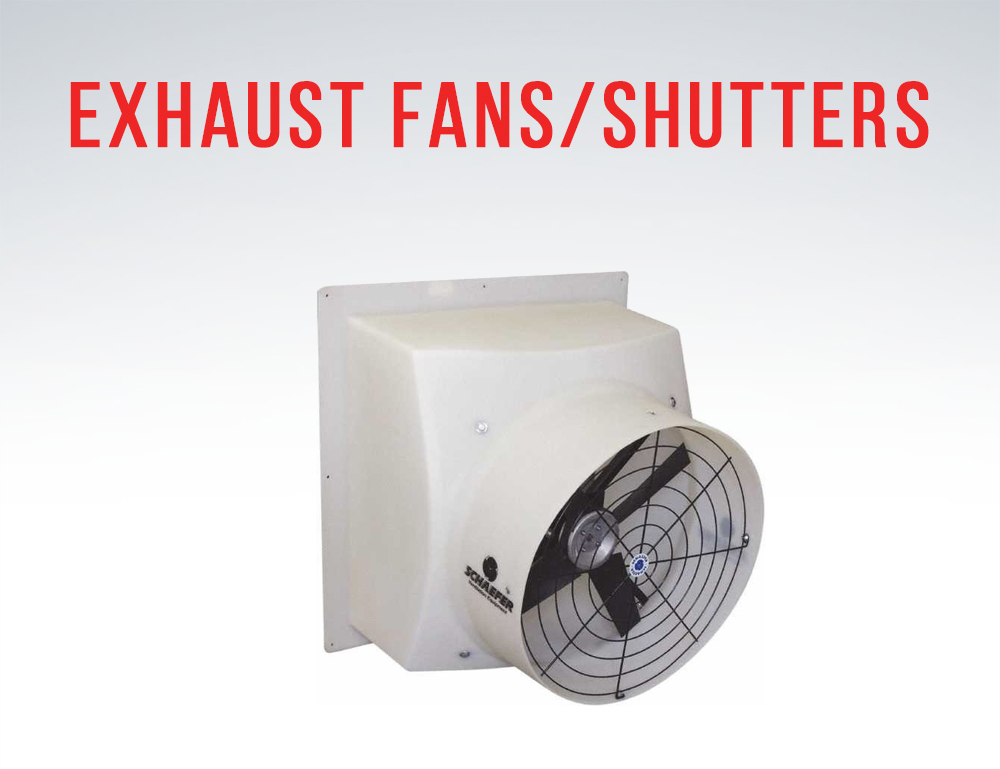 When placed on opposing sides of a greenhouse structure, the exhaust fan and shutters work in unison to circulate air through a structure. The shutters draw cool outside air into the greenhouse while the exhaust fan forces the hotter air from the structure. As the cooler air travels through the greenhouse it mixes with the warmer air effectively cooling the inside of the greenhouse. As this mixing of hot and cold air continues, it naturally creates a vacuum until one of the two or both stops the cycle.
The exhaust fan and shutters can be connected to an automatic system attached to the thermostat so that the exhaust fan and shutters will automatically open when temperatures exceed a set temperature. Otherwise, a grower will need to turn the system on manually. In a commercial greenhouse, it is more effective and economical to use a completely automatic environmental control system.
Circulation fan  Regarded as one of the most important aspects of a greenhouse’s ventilation system, the circulation fan moves air throughout a greenhouse and decreases the stagnant air in the structure. Similar to putting a fan on in a house during a hot day, the air will feel cooler circulating than when still. The system works through passive ventilation and has multiple benefits for a greenhouse. Plants benefit from the moving air as it prevents fungus growth and disease development.
Due to moving air, there are no specific hot or cold spots in a greenhouse which provides an even temperature throughout the structure. Fan placement in a HAF system Ever since the invention of the HAF system (Horizontal Air Flow) in 1967, it has become one of the most popular methods of greenhouse ventilation using air circulation. This system is based on the principle that air moving in a logical pattern in a building or structure only needs the energy for overcoming turbulence. In order for this concept to work correctly, the fans need to be sized and spaced correctly. Air itself is relatively heavy and a general rule of thumb is that for a 1’X1’ square, the air weighs 1 lb. In a greenhouse that is 30’X100” the weight of total air is roughly 1.5 tons. As the air moves, it will continue to move with only small pushes in the right direction.
Typically a greenhouse should move the air around 50-100 feet/minute in a greenhouse that is 30’X100’. As discussed previously, the HAF system is ideal for uniform temperatures, mitigating plant disease and fungal growth, increased CO2 levels, and more importantly an excellent and efficient cooling effect. This may leave a commercial grower asking, “what size fan should I get?“ In general terms, in order to move air at 50-100’ per minute, the greenhouse fan system must be at least 2 cu ft./minute for every square foot in a greenhouse. For example, in a greenhouse that is 50’X200’ the fan system must be able to meet 20,000 cu feet per minute. This total could be slightly lower if the greenhouse only has plants on the floor and grow tables. In greenhouses with plants grown in hanging baskets, the total needed will be slightly raised.
If fans are installed that move 1600cfm, 13 fans would be needed. In a smaller greenhouse of 30’X100’, the total cfm is 3,000. This means that the total fans needed with a 1600 rating would be 4. Although there are several parts and systems used in a greenhouse, it is important for the commercial greenhouse to customize their ventilation to their specific needs. Consulting with the manufacturer of the equipment, as well as assessing plant needs, will determine the exact set up needed for an effective greenhouse ventilation system. In the next section, there will be general guidelines for ventilation systems in a greenhouse. It is important to fit your exact needs to the system that needs be installed in your greenhouse.
Cooling systems
In a greenhouse, the environment is one that a plant literally calls home. This home needs to be cozy for plants and the environmental conditions kept at the correct settings to encourage optimum growth. Attention should be given to the greenhouse ventilation, irrigation, humidity, and greenhouse cooling systems. There are several ways to cool a greenhouse to maintain proper temperatures. The first step is to ensure proper ventilation, as this typically translates into great air quality. After ventilation is taken care of, a greenhouse operator can turn their focus to cooling the structure, especially on hot summer days when temperatures can rapidly soar.
Evaporative coolers
Growers looking for convenience and affordability should look at using evaporative cooling in a greenhouse. This process can work for both large and small greenhouses alike allowing for efficient cooling and air circulation. Evaporative cooling utilizes the relationship between relative humidity and temperature. When water evaporates it has a natural cooling ability. In this system, air moves through a screen and water is sprayed in such a manner that evaporation occurs. If the heat for the evaporation comes from the air, the resulting air will be cooled The ability of the air to hold water is known as relative humidity. The best air to run through the system should be dry or contain low relative humidity. This will maximize the amount of evaporative cooling accomplished through the system.
Shade cloth
For the commercial greenhouse operator that wants to minimize fungal growth and control temperature for plants, a shade cloth install may be the answer. The installation of a shade cloth helps to control lighting and provides protection from fungal growth from fungi that thrive in the sunshine. A shade cloth is also commonly used in commercial greenhouses with photosensitive plants to force blooming or mimic natural processes to prepare seasonal plants for early sale. A shade cloth can be installed on a manual roll or on automatic rolling systems. These automatic systems can also have timers integrated to unroll at set times. These automatic systems are sometimes connected to the thermostats to automatically open or close based on a set temperature.
Fogging 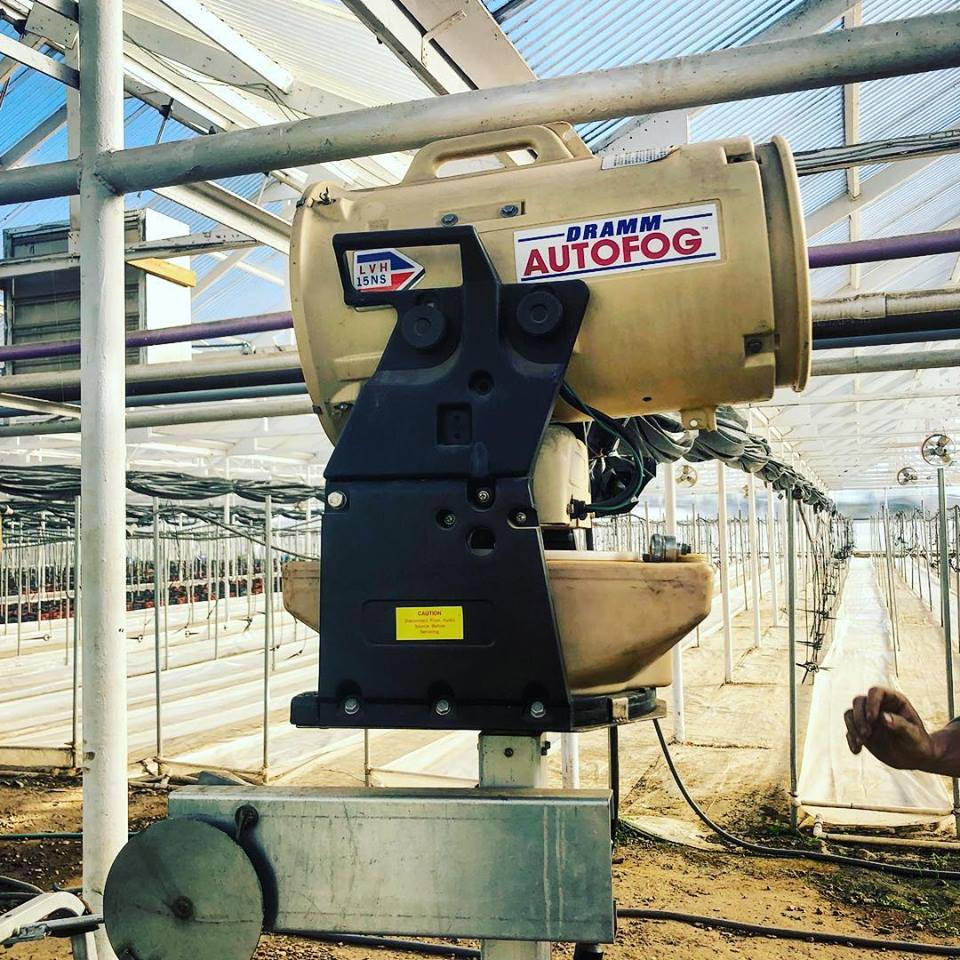 Another technique to increase relative humidity and control temperatures is through a fogging system. A commercial greenhouse can install automatic foggers through specialized nozzles in the irrigation system or through manual cart foggers. Some carts have the automatic option for fogging as well. The system works best when the water fog or mist is sprayed from the greenhouse ridge. This technique is also ideal for emergency situations when the temperature needs to be lowered quickly. Fogging and mist systems are also good for new seedlings whose roots are not strong enough to stand while watering. Some tropical plants require higher humidity, with foggers simulating the tropical environment they call home.
Geothermal cooling
Although many know geothermal as a warming technique for houses and greenhouses, this type of system can also be used as a cooling method. Geothermal is the use of the Earth as a natural thermostat. In the summer or warmer months the ground stays cool the further away from the surface you get. By running piping through the ground, water can circulate through a greenhouse and be cooled through the soil’s lower temperatures.
The water condenses in the pipes and cools. The cooled condensed water is then recirculated through a fan system and dispersed throughout the greenhouse. Ventilation and cooling are key components of a successful wholesale greenhouse operation. Without proper ventilation, not only will the plants suffer, but also the grower’s wallet. Ensuring proper maintenance and installation of ventilation and cooling systems will help in alleviating common greenhouse issues that arise throughout a growing season. These issues range from pests, disease, water loss, plant nutrient deficiencies, and overall yield.
By taking preventative measures, the grower is prepared for anything that comes their way. MORR Inc. is your go to source for commercial greenhouse ventilation, cooling, and automated environmental control systems. We provide innovative products and solutions to some of the industry’s top farming, greenhouse, and CEA operations! Click here for more information about our Commercial Greenhouse Products, Systems, and Services
About MORR Inc. 
MORR Inc. supplies top of the line wholesale commercial hydroponic systems, commercial grow systems, a wide selection of grow lights and automated control systems, nutrient rich soils and growing media, a large selection of specialized advanced plant nutrients for different plant life cycles, dosing and drip irrigation systems, high tech environmental meters and automated systems, fans, filters, plant pesticides, plant fungicides, general commercial grow facility supplies and services, plus much more! https://morr.com

About
MORR Inc.
MORR Inc. is a wholesale commercial agriculture distributor for planting, growing, and farming located in Los Angeles, CA. MORR Inc. supplies top of the line wholesale commercial hydroponic systems, commercial grow systems, a wide selection of grow lights and automated control systems, nutrient rich soils and growing media, a large selection of specialized advanced plant nutrients for different plant life cycles, dosing and drip irrigation systems, high tech environmental meters and automated systems, fans, filters, plant pesticides, plant fungicides, automated crop management systems, general commercial grow facility supplies and services, plus much more!
Call- 1-310-967-2022