Advanced Application Guide for Chester Boone’s Solutions
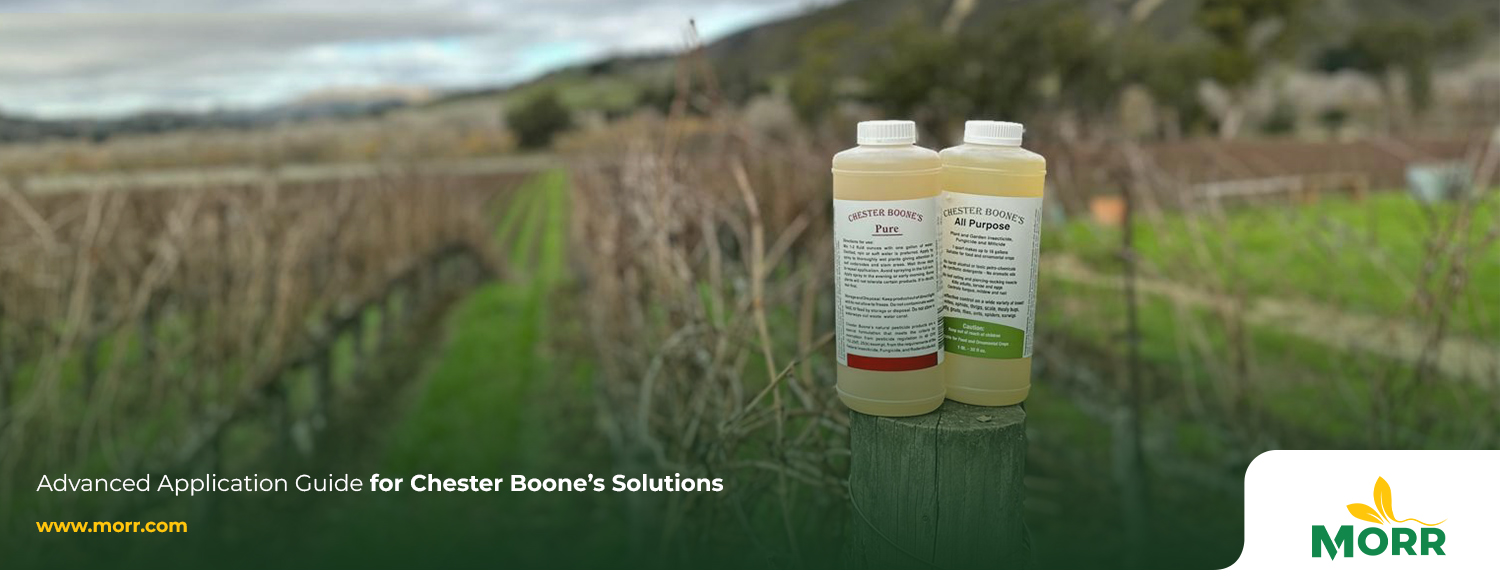
There are a lot of products in the market, and figuring out what works for your specific crops takes experience, knowledge, and sometimes a lot of trial-and-error.
We’re here to share insights into how to best apply Chester Boone’s solutions to your crops, and save you a lot of time and money. Both for mildew removal/prevention, as well as for pest management.
Let’s dive straight in and explore what Chester Boone’s solutions are made of:
Chester Boone’s All Purpose (Insecticide/Fungicide/Miticide)
ACTIVE INGREDIENT: citric acid 0.05%
OTHER INGREDIENTS: soap, water, potassium sorbate 99.95%
-
Type of Product: Insecticide, Fungicide and Miticide
-
Toxicity: No Harsh alcohol or toxic petro-chemicals, no synthetic detergents, no aromatic oils
-
Pest Management: Kills Adults, Larva and Eggs
-
Bacteria Management: Controls Fungus and Mildew
Chester Boone’s PURE Power Formula (Insecticide/Miticide)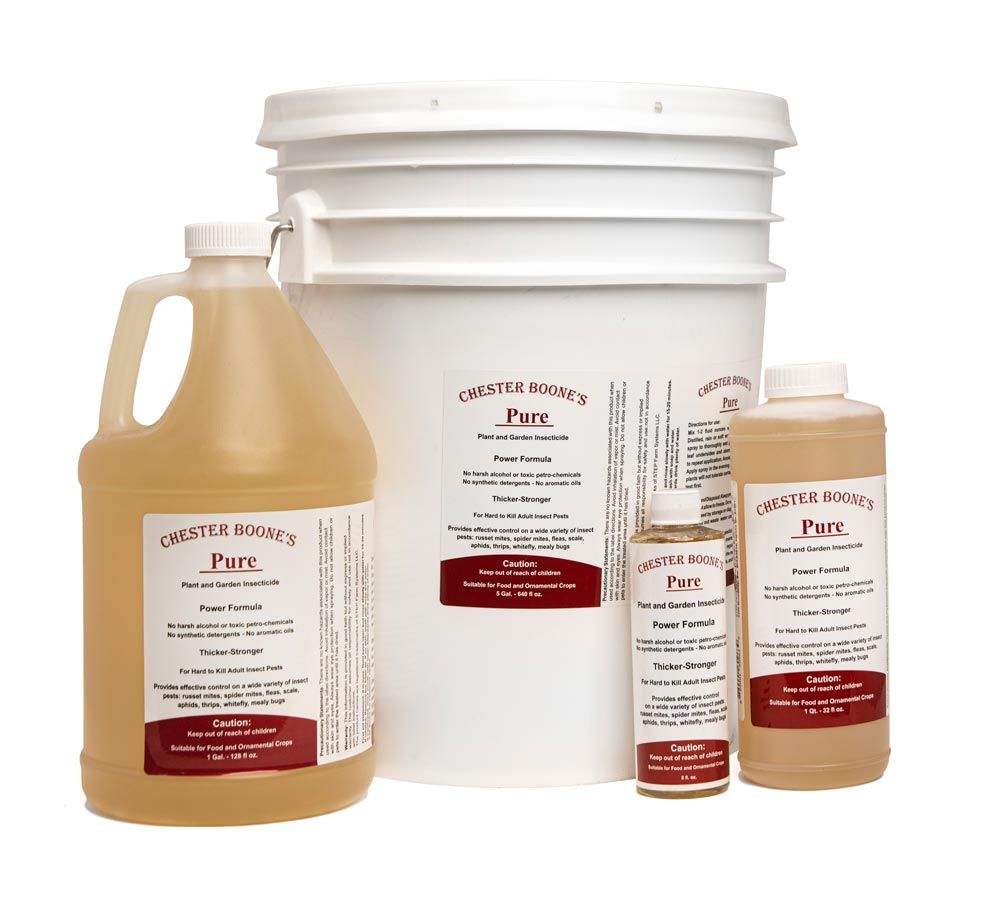
ACTIVE INGREDIENT: citric acid 0.1%
OTHER INGREDIENTS: soap, water 99.9%
-
Type of Product: Strong Insecticide and Miticide
-
Toxicity: No Harsh alcohol or toxic petro-chemicals, no synthetic detergents, no aromatic oils
-
Pest Management: For hard to kill adult insect pests
-
May be tank mixed with other insecticides
Chester Boone’s solutions conform to the Environmental Protection Agencies (EPA) regulations for Minimum Risk Pesticide Products - meaning that they are non-toxic pesticides that are innately safer than harsh chemicals.
The goal of any type of solution is to create maximum growth yield, so before we get into how to use this, we need to first understand which plants should not be treated with these solutions.
Understanding Plant Sensitivity
Sensitivity of plants to this product can be influenced by several factors which include; pest and disease pressure, cultivar, plant vigor, environmental conditions (temperature, relative humidity, moisture availability, light intensity, etc.), spray concentration, companion products, spray additives, pH of spray mixtures, delivery volume as well as the timing, number and frequency of applications.
Potential for plant injury increases when this product is used under the following conditions:
-
Plants are stressed, such as under hot (>90F), humid and/or drought conditions.
-
More than 3 sequential applications are made at 7-day intervals.
-
The pH of the final spray mixture is lowered below 8.0
-
High volume applications cause the spray to collect on the bottom of fruit such as apple, pear, nectarine, orange and grape.
-
Application of Chester Boone’s may alter the appearance of the glaucous bloom on spruces and the waxy bloom on grapes. Evaluate the effect of this product on a few test plants prior to full scale applications when sensitivity of plant species or cultivars under local use conditions is unknown.
-
Do not apply to very sensitive plants such as: horse chestnut, Japanese maple, mountain ash, Cherimoya, bleeding heart or sweetpeas.
The following plants may be sensitive to Chester Boone’s products:
-
Bald cypress, begonia, chrysanthemum, crown of thorns and other euphorbia, cucumber, delicate ferns, narrow leaf evergreens (especially when stressed or when tender new growth is present), dieffenbachia, fuschia, gardenia, impatiens, jade plant, lantana, ornamental ivy, palms, poinsettia, redbud, river birch, schefflera, zebra plant and some succulents.
-
Flowers of plants including african violet, ageratum, azalea, begonia, camellia, cannabis, chrysanthemum, dahlia, geranium, gloxinia, impatiens, lily, marigold, orchid, pansy, petunia, poinsettia bracts, rose, salvia, snapdragon, vinca and zinnia may be injured when sprayed with this product.
-
Do not apply to poinsettia bracts.
-
Safety to blooms should be determined for each individual cultivar of plant to be treated by conducting a small test under local use conditions.
Tip - test first on a few plants prior to broad scale applications when sensitivity under local use conditions is unknown.
As mentioned previously, Chester Boone’s All Purpose is formulated to be gentle on plants, and may be used on seedlings, cuttings, vegetative stage and through harvest. It’s very effective on all soft bodied insect pests, eggs, larva and adults, and has added sorbic acid working as a mildewcide fungicide. It can be used to clear plants of dust, ashes and insect pests, and it targets only crop pests and not (most) beneficial insects. Using it regularly helps prevent pestilential events before things get out of control.
Pure Power Formula on the other hand, is stronger against pests/insects, but does not give the fungicide protection that the all Purpose solution does.
Insecticidal / Miticidal Applications
Preharvest Interval: Chester Boone’s may be used up to the day of harvest. Both products (All Purpose & Pure) may be used as a foliar spray to control or suppress soft bodied pests on the following crops:
-
Asparagus and Brassica (such as: bok choy, broccoli, broccoli raab, Brussels sprout, cabbage, cauliflower, Chinese broccoli, Chinese cabbage, collard greens, kale, kohlrabi, mustard greens, napa cabbage and Swiss chard),
-
Bulb (such as: green onion, leeks, garlic and onion)
-
Cucurbit (such as: cucumber, melon, pumpkin and summer squash)
-
Fruiting (such as: eggplant, pepper and tomato)
-
Leafy (such as: celery, endive, escarole, lettuce and spinach)
-
Legume (such as: bean, pea and soybean)
-
Root and tuber (such as: beet, carrot, horseradish, potato, radish, rutabaga, shallot, sugar beet and yam)
-
Herbs and spices: (such as: basil, chive, dill, marjoram, parsley and sage
Insect Pest Application Instructions
-
Citrus rust mites, European red mites, Pacific mites, two spotted mites, Willamette mites:
-
Apply a 1% solution of Chester Boone’s Pure to control all stages.
-
-
Green apple aphids, Western grape aphids and variegated leafhoppers:
-
To achieve pest control, use of a 1 to 2 % solution of Chester Boone’s All Purpose. Scout and make the first application to control nymphs during the first generation (first brood) when the majority of nymphs are in the third to fourth instars. This product is effective for late season and preharvest suppression of leafhoppers in wine and raisin grapes.
-
-
Pepper weevil, Root aphids, Mealy bugs
-
Apply a 0.25%-0.5% solution of Chester Boone’s Pure tank mixed with beauveria bassiana. Spray plant stem and soil around base to control. Make follow up applications bi-weekly until curative control is achieved.
-
-
Pear psylla:
-
Apply a 1% solution of Chester Boone’s All Purpose alone or 0.25%-0.5% solution of Chester Boone’s Pure if tank mixing with another insecticide. Time spray at the first sign of infestation. Do not tank mix with oil. Do not apply during bloom. Make follow up applications on processing pears at petal fall and turn down for control of 1st and 2nd generation nymphs before they mature into fourth instars.
-
-
Rosy apple aphids:
-
Apply a 1% solution of Chester Boone’s All Purpose alone or 0.25%-0.5% solution of Chester Boone’s Pure if tank mixing with another insecticide. Time sprays to coincide with pre-pink or pink stages of apples. Do not tank mix with oil. Do not apply during bloom.
-
-
Balsam wooly adelgid:
-
Spray trees thoroughly when nymphs are abundant in early spring and/or fall. Make a second application 10 days later.
-
-
Cooley Spruce gall adelgid:
-
Apply a 2% solution of Chester Boone’s All Purpose to spruce in fall or spring when females begin egg laying. On Douglas fir, control exposed "wooly aphids" in early spring immediately before bud break (April) or in the fall (Sept.-Oct.) after foliage has hardened off.
-
-
Hemlock wooly adelgid:
-
Apply a 2% solution of Chester Boone’s All Purpose immediately after detecting an adelgid infestation to avoid the spread of the pest. In regions with heavy infestations and on trees with a history of infestation, a total of four applications made in April/May, June, August/September and October may be necessary. Because it is a contact insecticide, do not use this product as a preventative control measure.
-
-
Conifer and pine needle scale:
-
When insects first appear, apply a 1 to 2% spray of Chester Boone’s All Purpose to thoroughly wet crawlers.
-
-
Tent caterpillar:
-
Apply a 1% solution of Chester Boone’s Pure. Spray directly on young larvae when congregated on outside of the tent or dismantle tents and spray to thoroughly wet larvae. Spider mite.
-
Apply a 1% solution of Chester Boone’s Pure. Wet underside of leaves and needle sheaths. Wait 7 to 10 days to allow viable eggs to hatch and make a second application before mites reach egg laying maturity. For residual control, apply in a tank mix combination with a labeled companion insecticide containing abamectin.
-
-
Earwig:
-
Spray directly on insects after disturbing their hiding place.
-
-
Leafminer (Dipteran):
-
Apply a 1% solution of Chester Boone’s Pure in tank mix combination with a labeled companion insecticide which has residual activity.
-
-
Spruce spider mite on conifers:
-
Apply 1% solution of Chester Boone’s Pure to thoroughly wet infested needles. Repeat application after 7 days if needed.
-
-
Whiteflies:
-
Scout plants regularly and apply a 0.5% to 1% solution or Chester Boone’s Pure tank mixed with beauveria bassiana when pests first appear. Make a second application 7 days later to target newly hatched nymphs. Make additional applications at weekly intervals, but avoid more than three consecutive weekly applications.
-
-
Gypsy moth:
-
To suppress gypsy moth populations, apply a 2% solution or Chester Boone’s All Purpose directly to the larvae.
-
-
Euonymous scale:
-
Thoroughly wet crawlers with a 1% solution of Chester Boone’s Pure.
-
Field Crops
Pests Controlled: Aphids, caterpillars (in b-t tank mix combination), exposed thrips, greenbugs, fleahoppers, plant bugs (such as lygus and stink bugs), spider mites and whiteflies. Tank Mixtures: Use a 1% solution. Lower rates may be used in tank mixes for knockdown/suppression of adult whiteflies.
Turf Pest Application Instructions:
-
Chinch bugs, cutworms, fleas, greenbugs, grubs, mites, mole crickets and sod webworms. Apply a 1 to 2% solution of Chester Boone’s Pure. For use on mole crickets, irrigate turf prior to application of this product to bring mole crickets to the surface.
-
Powdery Mildew: Apply a 1.5 to 2% solution of Chester Boone’s All Purpose when the powdery mildew is first observed and repeat every 7 to 14 days, or as needed.
Ornamental Landscape Trees and Shrubs, Christmas Trees, and House Plants:
-
Pests controlled: Adelgids, ants, aphids, buck moth larvae, earwigs, elm leaf beetle larvae, sawfly larvae, gypsy moth eggs and larvae, lace bugs, leafhoppers, mealybugs, rust mites, phylloxera, spider mites, shore fly, plant bugs, psyllid, scales, tent caterpillars, exposed thrips, whitefly and powdery mildew.
-
Use Rates: Apply a 1 to 2% solution of Chester Boone’s All Purpose unless otherwise noted.
Note: Apply this product to wet only (minimize runoff). If wilting occurs a few hours after application, rinse with a clean water spray. Since applications may cause injury to flowers of some plant cultivars, test product on a few flowering plants under local use conditions prior to large scale use. Fungicidal Applications
Fungicidal Uses and Powdery Mildew instructions: (All Purpose Solution Only)
-
Cucurbits, Fruiting Vegetables, Herbs and Spices, Leafy Vegetables, Legumes, Root and Tuber Vegetables and Greenhouse Cucumber;
-
Apply a 1 to 2% solution of Chester Boone’s All Purpose when the first signs of powdery mildew appear and repeat at 7 to 10 day intervals if needed.
-
-
For all Fruit and Nut Crops:
-
Apply to wet (minimize runoff) with an air blast or other appropriate sprayer. Application of excessive water volumes will increase the potential for fruit injury by causing collection of spray on the bottom of fruit, especially when poor drying conditions exist. Grapes: This product may alter the waxy bloom and or cause marking on the surface of grapes which can affect the quality rating of table grapes at harvest. To reduce potential for fruit injury, do not apply in greater volume than 75 gallons of 0.25% solution per acre on table grapes after berries are 6 to 7 mm in diameter. Do not apply this product to Calmeria or Italia varieties of grapes.
-
-
Citrus:
-
Fruit marking may occur when sooty mold is present.
-
-
Pears:
-
Do not apply this product at a higher rate than 0.25% after the delayed dormant stage and full fruit size timing near harvest on fresh market pear varieties including d'Anjou and Asian pears. Applications greater than 0.25% after fruit set may cause marking which can reduce market value of the fruit.
-
-
Stone Fruits:
-
Concentrate (air blast) applications are specified with a maximum volume of 100 gallons per acre on smooth skinned fruits and 175 gallons per acre on peaches. Do not make dilute spray applications on smooth skinned fruit after fruit formation. Do not use on yellow skinned nectarine varieties. Do not apply Chester Boone’s to sweet cherries between fruit formation and harvest.
-
Nursery and non-bearing trees can be sprayed to runoff with no more than 3 consecutive applications with 7-day intervals.
Powdery mildew on Grapes: (All Purpose Solution Only)
-
Apply a 1 to 2% solution of Chester Boone’s All Purpose to control powdery mildew spores and hyphae. Initiate sprays at bud break or as appropriate based on local powdery mildew control requirements. Repeat at 7 to 10 day intervals, or as needed through veraison (development of variety-specific color).
-
Do not apply past veraison. Schedule a follow-up fungicide application within 7 to 10 days after each application when Chester Boone’s is used alone.
-
Do not mix with sulfur. Do not use it within 3 days of sulfur application. This product may be applied in tank mixes with other labeled fungicides. Consult your local extension specialist, certified crop advisor, and/or manufacturer representative for specific product recommendations. Tank Mix Rate: Apply as a 1 to 2% solution with labeled rates of companion pesticides. Rates of Chester Boone’s All Purpose below 1% will not be fungicidal against powdery mildew. Complete coverage of grape clusters as well as leaf surfaces is essential for effective control.
Powdery mildew on Citrus fruit, Pome fruit, Stone fruit, Small fruits and Berries, and Tree Nuts: (All Purpose Solution Only)
-
Use Chester Boone’s All Purpose to control powdery mildew spores and hyphae. Apply a 1 to 2% solution of this product when first signs of powdery mildew appear or as appropriate based on local powdery mildew requirements and repeat at 7 to 14-day intervals, or as needed.
-
Do not mix with sulfur. Do not use it within 3 days of a sulfur application.
-
Do not apply within 7 days of an oil, calcium or sulfur application. Cease spray activities at temperatures higher than 85 degrees.
-
Avoid applications when trees are under environmental stress.
Powdery Mildew on greenhouse grown Roses: (All Purpose Solution Only)
-
Apply a 1 to 2% solution of Chester Boone’s All Purpose to control powdery mildew spores and hyphae.
-
Initiate sprays when first signs of powdery mildew appear and repeat at 7 to 10 day intervals, or as needed. Alternate applications of this product with other fungicides to avoid making more than three successive applications of this product at intervals of 7 days or less.
-
Roses may be treated with sublimated sulfur using sulfur-heating pots or similar devices before or after treatment with Chester Boone’s. To minimize the potential for plant injury, allow 24 hours to elapse between using Chester Boone’s and sublimated sulfur applications.
-
Mixing other forms of sulfur (sprayable or dusting) or applying this product within up to 5 days of a sulfur application may also increase the potential for plant injury, especially during hot weather (>90°F).
How & When to Apply?
Mixing and Application Rates:
Mix Chester Boone’s concentrate at rates of 0.25% up to 2% per gallon of water. A 1% rate is frequently used for most crops Refer to individual sections of this guide for specific use rates for control of pests on specific crops. A 1% solution is prepared by adding 1 gallon of Chester Boone’s to 99 gallons of spray water.
Mixing: Always determine the compatibility of water, pesticides and other tank additives with
this product prior to addition to the spray tank. Determine compatibility by conducting a jar test
using proportional quantities of each material. Use freshly mixed spray made with soft water
(rain or R.O. water). If water has high mineral content (hardness >300 ppm or 17.5
grains/gallon), check for compatibility as described above.
Adjusting solution ph lower should not be necessary and if adjusted, never below 8.8
Do not tank mix with oil.
Timing of Application:
Initiate applications as soon as pest is observed, or as needed to avoid economic injury.
Repeat applications at one-week intervals, or as needed, to control infesting or increasing pest populations.
-
Do not make repeat applications at less than 7-day intervals, or make more than 3 sequential applications at 7- to 14-day intervals unless your experience has shown the use pattern to be non-injurious to the type and the development stage of plant(s) to be treated under local growing conditions.
Other Application Guidelines:
This product may be applied with most types of ground or aerial spray equipment.
-
Do not use with pulse or thermal fogger applicators.
-
Do not apply through any type of irrigation and hydroponic systems.
This product must come into contact with the targeted soft-bodied pests or powdery mildew to be effective. Complete coverage of pests is essential for maximum control. Direct sprays to contact the pests.
-
In general, adequate coverage requires a minimum of 50 gallons of total spray volume per acre.
-
Higher volumes may be required on larger perennial crops.
Apply Chester Boone’s solutions to wet (minimize run-off) to decrease the potential for injury on foliage, fruit and flowers of sensitive plants. Avoid applications when wind conditions impair thorough coverage.
-
Do not apply to new seedlings and transplants without determining sensitivity (phytotoxicity)
NOTE: Read all labels before applying. It is a violation of Federal law to use this product in a manner inconsistent with its labeling.
If you're looking for other kinds of commercial pest control solutions like fungicide, pesticide, or miticide, explore some of the other popular tried-and-true solutions:
1. BioWorks Molt-X (OMRI Certified)
2. BioSafe AzaGuard Azadirachtin Insecticide 3%
3. MGK PyGanic Crop Protection EC 5.0 - OMRI Listed
4. Plant Therapy Insecticide, Miticide, Fungicide
5. Marrone Bio Innovations Venerate CG Insecticide / Marrone Bio Innovations Venerate CG Biofungicide
To speak to someone from our team about specific pests and if Chester Boone’s is the right fit, please give us a call (855-TRY-MORR).

About
MORR Inc.
MORR Inc. is a wholesale commercial agriculture distributor for planting, growing, and farming located in Los Angeles, CA. MORR Inc. supplies top of the line wholesale commercial hydroponic systems, commercial grow systems, a wide selection of grow lights and automated control systems, nutrient rich soils and growing media, a large selection of specialized advanced plant nutrients for different plant life cycles, dosing and drip irrigation systems, high tech environmental meters and automated systems, fans, filters, plant pesticides, plant fungicides, automated crop management systems, general commercial grow facility supplies and services, plus much more!
Call- 1-310-967-2022