
Lida Plant Research Vaccilan - 0-0-3 - Potassium Foliar Fertilizer - 0.25 Gallons


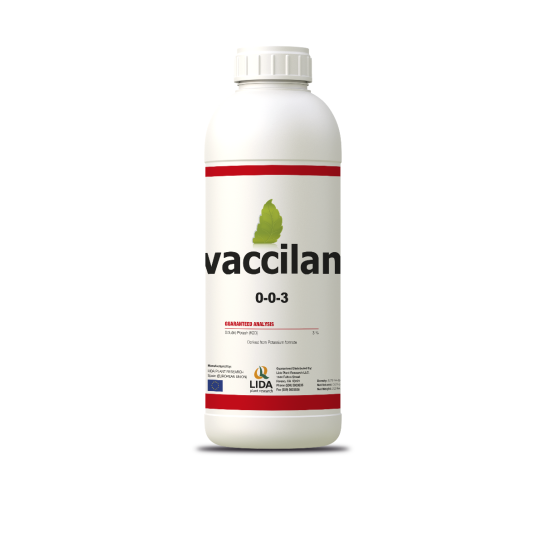

About this product
Vaccilan is a liquid foliar fertilizer containing 3% soluble potash (K₂O) derived from potassium formate in a proprietary formulation. It is an amber liquid with a pH of 7.5 and a relative density of 1.03. The product is designed to supply potassium as a foliar spray on most crops. Immediately after application, Vaccilan raises the Brix degrees (sugar levels) in the leaves' mesophyll, making plants less attractive and more resistant to sap-sucking insects and mites. The product has zero residues, a 0-hour Restricted Entry Interval (REI), and a 0-day Pre-Harvest Interval (PHI). It is compatible with most chemical and biological plant protection products, as well as mineral and organic nutrients. Vaccilan can be used in integrated pest management (IPM) programs, both mixed with insecticides and acaricides and alone when a residue-free treatment is required. The product is not classified as hazardous under Regulation (EC) No 1272/2008.
Chemical Composition and Formulation
-
Soluble Potash (K₂O): 3%
-
Derived from: Potassium formate
The product is a liquid with a pH of 7.5. Relative density is 1.03.
Functional Mechanism
Potassium is a critical nutrient for carbohydrate metabolism, osmoregulation, and enzyme activation. Vaccilan delivers potassium in the form of potassium formate, a highly soluble potassium salt with low phytotoxicity risk. The proprietary formulation raises Brix levels (total dissolved solids, primarily sugars) in leaf mesophyll tissue. Elevated Brix levels make plant sap less palatable to piercing-sucking insects including aphids, whiteflies, spider mites, thrips, and leafhoppers. High Brix also correlates with improved plant health, stress tolerance, and disease resistance. The product works through nutritional enhancement rather than direct toxicity, which prevents resistance development and allows use in organic and residue-sensitive programs.
Target Applications and Rates
Vegetables (pepper, tomato, melons, cucumber, squash, pumpkin, green beans, green peas, onion, garlic, potato, sweet potato, carrot, beets, cabbage, cauliflower, broccoli, brussel sprouts, radish, pak choi, bok choi, pe-tsai, other brassicas, leafy greens including lettuce, celery, cilantro, parsley, chards, spinach, asparagus, artichoke)
-
Foliar rate: 8 to 20 fl oz per acre
-
For spray volume less than 30 gallons per acre: use lower rates and concentrations of 3 to 4 fl oz per 10 gallons water
-
For spray volume above 50 gallons per acre: use higher rates and concentrations of 2 to 3 fl oz per 10 gallons water
-
Aircraft applications: low to medium rate
-
Application schedule: first two applications every 7 days, next two applications every 21 days
Strawberry, Blackberry, Raspberry, Blueberry
-
Foliar rate: 16 to 32 fl oz per acre
-
For spray volume less than 100 gallons per acre: use low to medium rates and concentrations of 1.5 to 3 fl oz per 10 gallons water
-
For spray volume above 120 gallons per acre: use medium to high rates and concentrations of 1 to 1.5 fl oz per 10 gallons water
-
Aircraft applications: low to medium rate
-
Application schedule: first two applications every 7 days, next two applications every 21 days
Vineyard (Wine and Table Grapes)
-
Foliar rate: 16 to 32 fl oz per acre
-
For spray volume less than 80 gallons per acre: use low to medium rates and concentrations of 1.5 to 3 fl oz per 10 gallons water
-
For spray volume above 120 gallons per acre: use medium to high rates and concentrations of 1 to 2 fl oz per 10 gallons water
-
Aircraft applications: low to medium rate
-
Application schedule: 2 to 3 applications with 21 days between applications
Fruit and Nut Trees (orange, lemon, lime, mandarin and hybrids, grapefruit, apple, stone fruits including peach, apricot, nectarine, plum, prune, cherry; nuts including almond, hazelnut; avocado, fig)
-
Foliar rate: 16 to 32 fl oz per acre
-
For spray volume less than 80 gallons per acre: use low to medium rates and concentrations of 1.5 to 3 fl oz per 10 gallons water
-
For spray volume above 120 gallons per acre: use medium to high rates and concentrations of 1 to 2 fl oz per 10 gallons water
-
Aircraft applications: low to medium rate
-
Application schedule: 2 to 3 applications with 21 days between applications
Row Crops (corn, sorghum, wheat, barley, dry beans, soy beans, cotton, sugar beets) and Forage Crops (hay grasses)
-
Foliar rate: 4 to 10 fl oz per acre
-
Terrestrial application concentration: 2 to 4 fl oz per 10 gallons water
-
Application schedule: 1 to 2 applications with 20 to 25 days between applications
Nurseries & Landscape (ornamental, trees, turf, sod)
-
Foliar rate: 8 to 20 fl oz per acre
-
For spray volume less than 30 gallons per acre: use lower rates and concentrations of 3 to 4 fl oz per 10 gallons water
-
For spray volume above 50 gallons per acre: use higher rates and concentrations of 2 to 3 fl oz per 10 gallons water
-
Application schedule: 2 to 3 applications with 15 to 21 days between applications
Hydroponic Crops
-
Apply as foliar spray using the recommended rates for the specific commodity on this label
Use Restrictions and Warnings
Do not exceed the recommended rate. Use only on crops indicated on the label. The user is responsible for any damages caused by lack of efficacy, toxicity, or residues due to failure to follow label instructions. Keep out of reach of children. Keep away from food, drinks, and cattle feed.
Storage and Handling
Avoid low temperatures in winter and temperatures above 82°F (28°C). Avoid direct light and storage longer than 2 years. Store between 5°C and 35°C (41°F to 95°F) in a dry, well-ventilated place. Keep away from oxidizing agents and highly acidic or alkaline materials. Keep away from sources of heat, radiation, and electricity. Avoid contact with food. Once opened, containers must be carefully closed and placed vertically to prevent spills. Never use pressure to empty containers; they are not pressure-resistant.
Safety and First Aid
The product is not classified as hazardous under Regulation (EC) No 1272/2008. No individual protection equipment is strictly required when the product is handled correctly, though work footwear is recommended. In the application area, smoking, eating, and drinking must be prohibited.
-
Inhalation: If breathing stops, seek emergency medical attention. Move victim to open air; keep warm and calm. If breathing is irregular or stops, perform artificial respiration.
-
Eye contact: Remove contact lenses if present. Wash eyes with plenty of clean, cool water for at least 10 minutes while holding eyelids open. Seek medical assistance.
-
Skin contact: Remove contaminated clothing.
-
Ingestion: Keep calm. Never induce vomiting.
No known acute or delayed effects from exposure to the product. In case of doubt or when symptoms persist, get medical attention. Never administer anything orally to unconscious persons.
Environmental Precautions
Do not allow product to enter sewers or waterways. Prevent penetration into the ground. Contain and collect spills with inert absorbent material (earth, sand, vermiculite, diatomite). Clean area immediately with a suitable decontaminant. Dispose of waste according to local and national regulations.
Firefighting Measures
Suitable extinguishing media include powder, CO₂, alcohol-resistant foam, and water spray. Do not use a direct stream of water. In the presence of electrical voltage, do not use water or foam. Exposure to combustion or decomposition products can be harmful to health. Use water to cool containers close to heat source or fire.
Compliance
Information regarding the contents and levels of metals in this product is available at http://www.aapfco.org/metals.html. The product is not affected by the SEVESO III Directive (2012/18/EU).
-
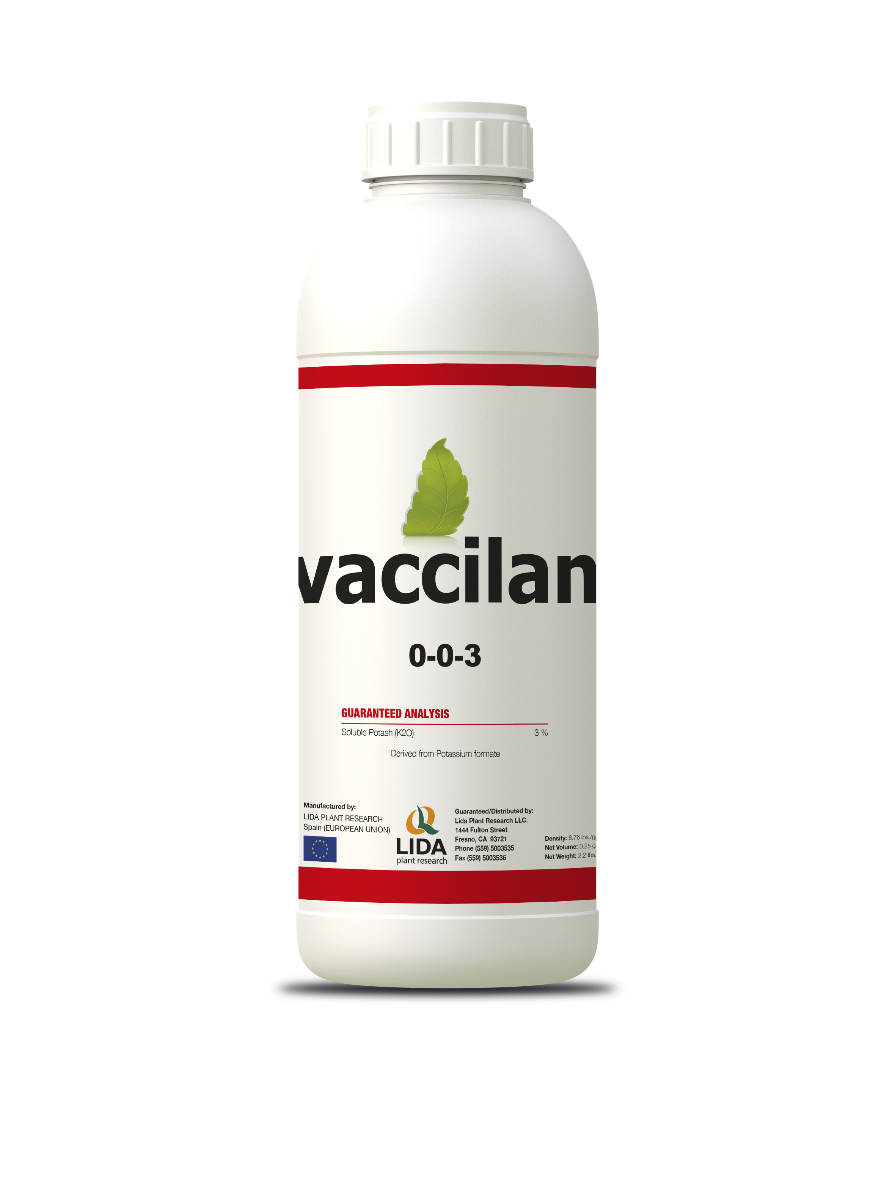 NLPR034 Lida Plant Research Vaccilan - 0-0-3 - Potassium Foliar Fertilizer - 0.25 Gallons
Details
Vaccilan is a liquid foliar fertilizer containing 3% soluble potash (K₂O) derived from potassium formate in a proprietary formulation. It is an amber liquid with a pH of 7.5 and a relative density of 1.03. The product is designed to supply potassium as a foliar spray on most crops. Immediately after application, Vaccilan raises the Brix degrees (sugar levels) in the leaves' mesophyll, making plants less attractive and more resistant to sap-sucking insects and mites. The product has zero residues, a 0-hour Restricted Entry Interval (REI), and a 0-day Pre-Harvest Interval (PHI). It is compatible with most chemical and biological plant protection products, as well as mineral and organic nutrients. Vaccilan can be used in integrated pest management (IPM) programs, both mixed with insecticides and acaricides and alone when a residue-free treatment is required. The product is not classified as hazardous under Regulation (EC) No 1272/2008.
Chemical Composition and Formulation
-
Soluble Potash (K₂O): 3%
-
Derived from: Potassium formate
The product is a liquid with a pH of 7.5. Relative density is 1.03.
Functional Mechanism
Potassium is a critical nutrient for carbohydrate metabolism, osmoregulation, and enzyme activation. Vaccilan delivers potassium in the form of potassium formate, a highly soluble potassium salt with low phytotoxicity risk. The proprietary formulation raises Brix levels (total dissolved solids, primarily sugars) in leaf mesophyll tissue. Elevated Brix levels make plant sap less palatable to piercing-sucking insects including aphids, whiteflies, spider mites, thrips, and leafhoppers. High Brix also correlates with improved plant health, stress tolerance, and disease resistance. The product works through nutritional enhancement rather than direct toxicity, which prevents resistance development and allows use in organic and residue-sensitive programs.
Target Applications and Rates
Vegetables (pepper, tomato, melons, cucumber, squash, pumpkin, green beans, green peas, onion, garlic, potato, sweet potato, carrot, beets, cabbage, cauliflower, broccoli, brussel sprouts, radish, pak choi, bok choi, pe-tsai, other brassicas, leafy greens including lettuce, celery, cilantro, parsley, chards, spinach, asparagus, artichoke)
-
Foliar rate: 8 to 20 fl oz per acre
-
For spray volume less than 30 gallons per acre: use lower rates and concentrations of 3 to 4 fl oz per 10 gallons water
-
For spray volume above 50 gallons per acre: use higher rates and concentrations of 2 to 3 fl oz per 10 gallons water
-
Aircraft applications: low to medium rate
-
Application schedule: first two applications every 7 days, next two applications every 21 days
Strawberry, Blackberry, Raspberry, Blueberry
-
Foliar rate: 16 to 32 fl oz per acre
-
For spray volume less than 100 gallons per acre: use low to medium rates and concentrations of 1.5 to 3 fl oz per 10 gallons water
-
For spray volume above 120 gallons per acre: use medium to high rates and concentrations of 1 to 1.5 fl oz per 10 gallons water
-
Aircraft applications: low to medium rate
-
Application schedule: first two applications every 7 days, next two applications every 21 days
Vineyard (Wine and Table Grapes)
-
Foliar rate: 16 to 32 fl oz per acre
-
For spray volume less than 80 gallons per acre: use low to medium rates and concentrations of 1.5 to 3 fl oz per 10 gallons water
-
For spray volume above 120 gallons per acre: use medium to high rates and concentrations of 1 to 2 fl oz per 10 gallons water
-
Aircraft applications: low to medium rate
-
Application schedule: 2 to 3 applications with 21 days between applications
Fruit and Nut Trees (orange, lemon, lime, mandarin and hybrids, grapefruit, apple, stone fruits including peach, apricot, nectarine, plum, prune, cherry; nuts including almond, hazelnut; avocado, fig)
-
Foliar rate: 16 to 32 fl oz per acre
-
For spray volume less than 80 gallons per acre: use low to medium rates and concentrations of 1.5 to 3 fl oz per 10 gallons water
-
For spray volume above 120 gallons per acre: use medium to high rates and concentrations of 1 to 2 fl oz per 10 gallons water
-
Aircraft applications: low to medium rate
-
Application schedule: 2 to 3 applications with 21 days between applications
Row Crops (corn, sorghum, wheat, barley, dry beans, soy beans, cotton, sugar beets) and Forage Crops (hay grasses)
-
Foliar rate: 4 to 10 fl oz per acre
-
Terrestrial application concentration: 2 to 4 fl oz per 10 gallons water
-
Application schedule: 1 to 2 applications with 20 to 25 days between applications
Nurseries & Landscape (ornamental, trees, turf, sod)
-
Foliar rate: 8 to 20 fl oz per acre
-
For spray volume less than 30 gallons per acre: use lower rates and concentrations of 3 to 4 fl oz per 10 gallons water
-
For spray volume above 50 gallons per acre: use higher rates and concentrations of 2 to 3 fl oz per 10 gallons water
-
Application schedule: 2 to 3 applications with 15 to 21 days between applications
Hydroponic Crops
-
Apply as foliar spray using the recommended rates for the specific commodity on this label
Use Restrictions and Warnings
Do not exceed the recommended rate. Use only on crops indicated on the label. The user is responsible for any damages caused by lack of efficacy, toxicity, or residues due to failure to follow label instructions. Keep out of reach of children. Keep away from food, drinks, and cattle feed.
Storage and Handling
Avoid low temperatures in winter and temperatures above 82°F (28°C). Avoid direct light and storage longer than 2 years. Store between 5°C and 35°C (41°F to 95°F) in a dry, well-ventilated place. Keep away from oxidizing agents and highly acidic or alkaline materials. Keep away from sources of heat, radiation, and electricity. Avoid contact with food. Once opened, containers must be carefully closed and placed vertically to prevent spills. Never use pressure to empty containers; they are not pressure-resistant.
Safety and First Aid
The product is not classified as hazardous under Regulation (EC) No 1272/2008. No individual protection equipment is strictly required when the product is handled correctly, though work footwear is recommended. In the application area, smoking, eating, and drinking must be prohibited.
-
Inhalation: If breathing stops, seek emergency medical attention. Move victim to open air; keep warm and calm. If breathing is irregular or stops, perform artificial respiration.
-
Eye contact: Remove contact lenses if present. Wash eyes with plenty of clean, cool water for at least 10 minutes while holding eyelids open. Seek medical assistance.
-
Skin contact: Remove contaminated clothing.
-
Ingestion: Keep calm. Never induce vomiting.
No known acute or delayed effects from exposure to the product. In case of doubt or when symptoms persist, get medical attention. Never administer anything orally to unconscious persons.
Environmental Precautions
Do not allow product to enter sewers or waterways. Prevent penetration into the ground. Contain and collect spills with inert absorbent material (earth, sand, vermiculite, diatomite). Clean area immediately with a suitable decontaminant. Dispose of waste according to local and national regulations.
Firefighting Measures
Suitable extinguishing media include powder, CO₂, alcohol-resistant foam, and water spray. Do not use a direct stream of water. In the presence of electrical voltage, do not use water or foam. Exposure to combustion or decomposition products can be harmful to health. Use water to cool containers close to heat source or fire.
Compliance
Information regarding the contents and levels of metals in this product is available at http://www.aapfco.org/metals.html. The product is not affected by the SEVESO III Directive (2012/18/EU).