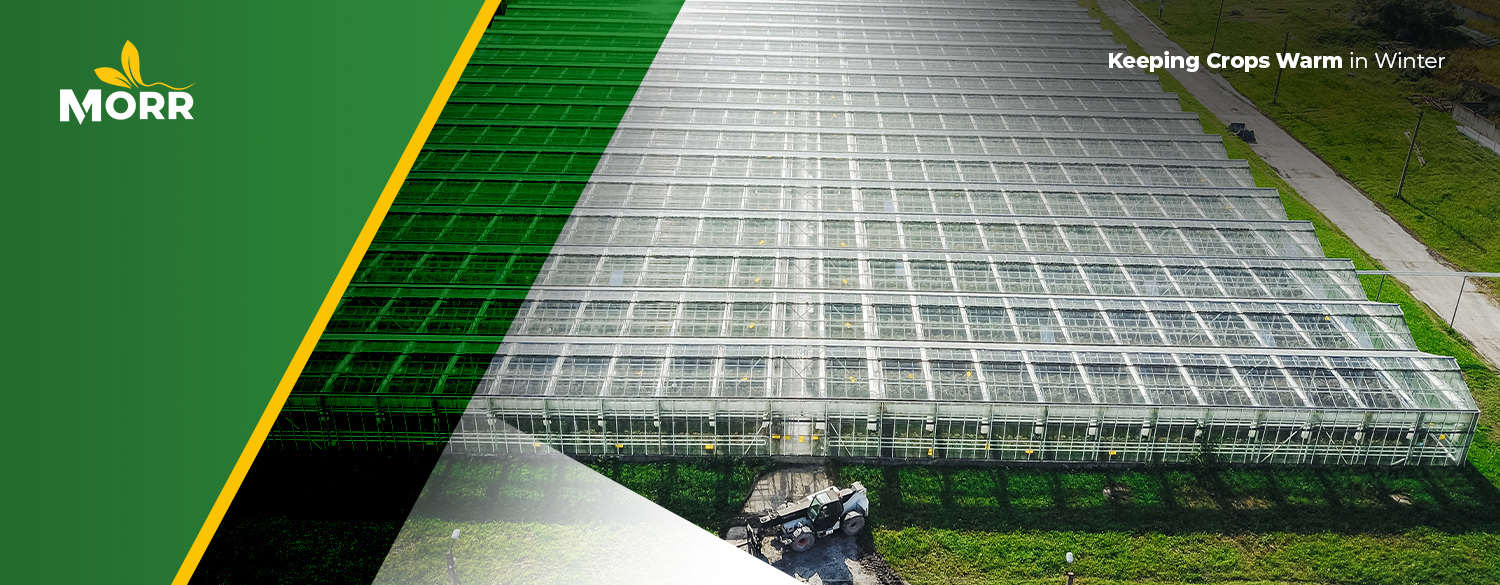
Keeping Crops Warm in Winter
Keeping Greenhouse and Indoor Farm Crops Warm
Keeping Old Man Winter at Bay: Keeping Crops Warm in the Colder Months
When the leaves begin to change and flutter to the ground, the air gets a little crisper. With these changes comes the chill and eventual colder weather to areas heading into fall and winter. These changes mean that the commercial greenhouse needs to prepare for the cold to save crops and extend growing seasons. There are several methods to heating a greenhouse both passively and mechanically. A grower should utilize both to have a cost-effective approach that can also keep homeostasis within the growing area. The main focus, however, should be in heating the greenhouse in these colder months.
Cold Temperatures and The Growing Area
Preparation should be done before the colder temperatures take effect, as these temperatures left unchecked can cause negative impacts to the greenhouse and crops such as health, vitality, and overall hardiness. Depending on the hardiness zone location of the commercial greenhouse, severe winter conditions can truly pose a risk to growing plants that can cause freeze damage and even death of a crop.
These low temperatures can freeze plant cells and stop the flow of water and plant nutrients. If crops are warm weather crops, the cold is even more of a threat. Winter also causes other types of damage from sun scalding, snow breakage, plant tissue death, and desiccation.
Basic Wintering Practices for the Commercial Operation
There are several approaches that can be employed in a greenhouse that depend on plants grown, temperatures needed to sustain healthy plants, budget, and location of the greenhouse in relation to the severity of the cold temperatures and weather. There are six general approaches that can be used across the board regardless of the factors of the individual operation.
|
Methods for Controlling Temperatures in Colder Months |
|
Heaters
In bitter winter months, heaters are a major line of defense to dropping and fluctuating temperatures. Heating systems can keep plants warm and protect them from heat damage. By using a fan heater or separate fans to move air around a grower can effectively control and limit the cold spots and fluctuations. This greatly reduces the occurrences of harmful diseases. Even a greenhouse that utilizes baseboard heat, should have a fan in place or another method of producing warm air to assist with the control of temperatures.
Thermostats
In the modern greenhouse, automation and technology allow a finer tuned growing environment. A grower should install thermostats and thermometers in the greenhouse and growing area. These can either be manual or digital. Keeping a close watch on the air temperature encourages the more balanced use of heaters. The use of thermostats can save money and energy for a greenhouse because these directly control the operation of heaters. Thermostats will only turn on the heaters if needed when temperatures drop below the preset temperature on the thermostat.
Air Circulation
Air circulation is vital in the control of temperatures both in heat and cold. Without the movement of fresh air to growing areas, temperatures can go unchecked, diseases can sprout up, and pests can flourish. By having a slight breeze or air movement in a growing area, plants grow happier and healthier. The placement of fans throughout a growing area is ideal to move the air around. In winter months, this prevents water from settling too long on leaves and freezing or the development of cold spots to form.
Ventilation
Oftentimes ventilation and air circulation go hand in hand. Ventilation systems should come equipped with fans to remove and bring in air to the greenhouse for fans to then circulate. By having good ventilation, excessive moisture can also be controlled which in turn prevents pathogens such as powdery mildew from forming. Moisture can also be reduced by watering plants only when needed (even better if that system is one that is closed and either a drip line or something similar). Vents in the ridges and along the sides can be opened on warmer mornings and then closed to trap the heat before the sun goes back down.
Raised Benches
Using the scientific principle of hot air rising, raised benches offer protection from the chilly air that lays on the floors of greenhouses. Cement or gravel can cool down in the night and cause more cold stress than those that are on raised benches and beds. Raised beds also allow for warm air to be circulated around the root zone of pots to protect vulnerable roots from the freezing temperatures. Raised benches have many other benefits that allow for better growing conditions for plants that don't relate to the control of temperature such as reduction of pests and disease.
Solar Energy in Thermal Mass
One of the passive methods of warming a greenhouse is through solar energy and increasing thermal mass within a greenhouse. The clear glass or plastic is ideal for getting as much light and heat as possible in the daytime. However, this large area of exposed plastic or glass is like a double-edged sword as it will also release heat quickly when the sun goes down.
One passive method that can be used is increasing the thermal mass in the greenhouse, this allows for a longer period that it takes for the greenhouse to actually cool down because there is more ‘stuff’ to buffer the temperature decrease.
This can be achieved through water barrels because there is a higher heat capacity. A grower can stack several 55 gallon drums of water. This is both an easy and effective method to add thermal mass. These barrels need to be stacked in areas where they are in direct sunlight most times at the north wall. These barrels can also be a safe haven area for more vulnerable plants such as seedlings by placing the trays on or near the barrels.
How to Determine the Risk Levels of Lower Temperatures
Not all operations share the same risk of extreme temperatures or too cold conditions for crops to grow well. The best way to determine the risk level is looking at the growing zone (also called hardiness zone) location of the greenhouse. The growing zones determine the general temperature ranges of the area and which plants grow best in those areas. In the United States the growth zones are 3-10.
The zones 3-5 are those that see cold temperatures and absolutely will require a growing operation to employ some form of heating and protection from the cold. Zones 6-7 are areas that also require heating in the colder months, but the temperatures are not as low as the more northern areas. Zones 8-10 risk for freezing temperatures but these are more manageable. Research should be conducted to see plant needs, as well as the growing zone the operation is located.
|
Growing Zones of the US |
Lowest Temperature in Range |
|
3 |
-40 to -30 °F |
|
4 |
-30 to -20 °F |
|
5 |
-20 to -10 °F |
|
6 |
-10 to 0 °F |
|
7 |
0 to 10 °F |
|
8 |
10 to 20 °F |
For any assistance on the selection, installation, maintenance, and more for heating systems, thermostats, ventilation systems, and more into an operation, reach out to an expert staff at MORR Inc. today- Call 1-310-967-2022

About
MORR Inc.
MORR Inc. is a wholesale commercial agriculture distributor for planting, growing, and farming located in Los Angeles, CA. MORR Inc. supplies top of the line wholesale commercial hydroponic systems, commercial grow systems, a wide selection of grow lights and automated control systems, nutrient rich soils and growing media, a large selection of specialized advanced plant nutrients for different plant life cycles, dosing and drip irrigation systems, high tech environmental meters and automated systems, fans, filters, plant pesticides, plant fungicides, automated crop management systems, general commercial grow facility supplies and services, plus much more!
Call- 1-310-967-2022